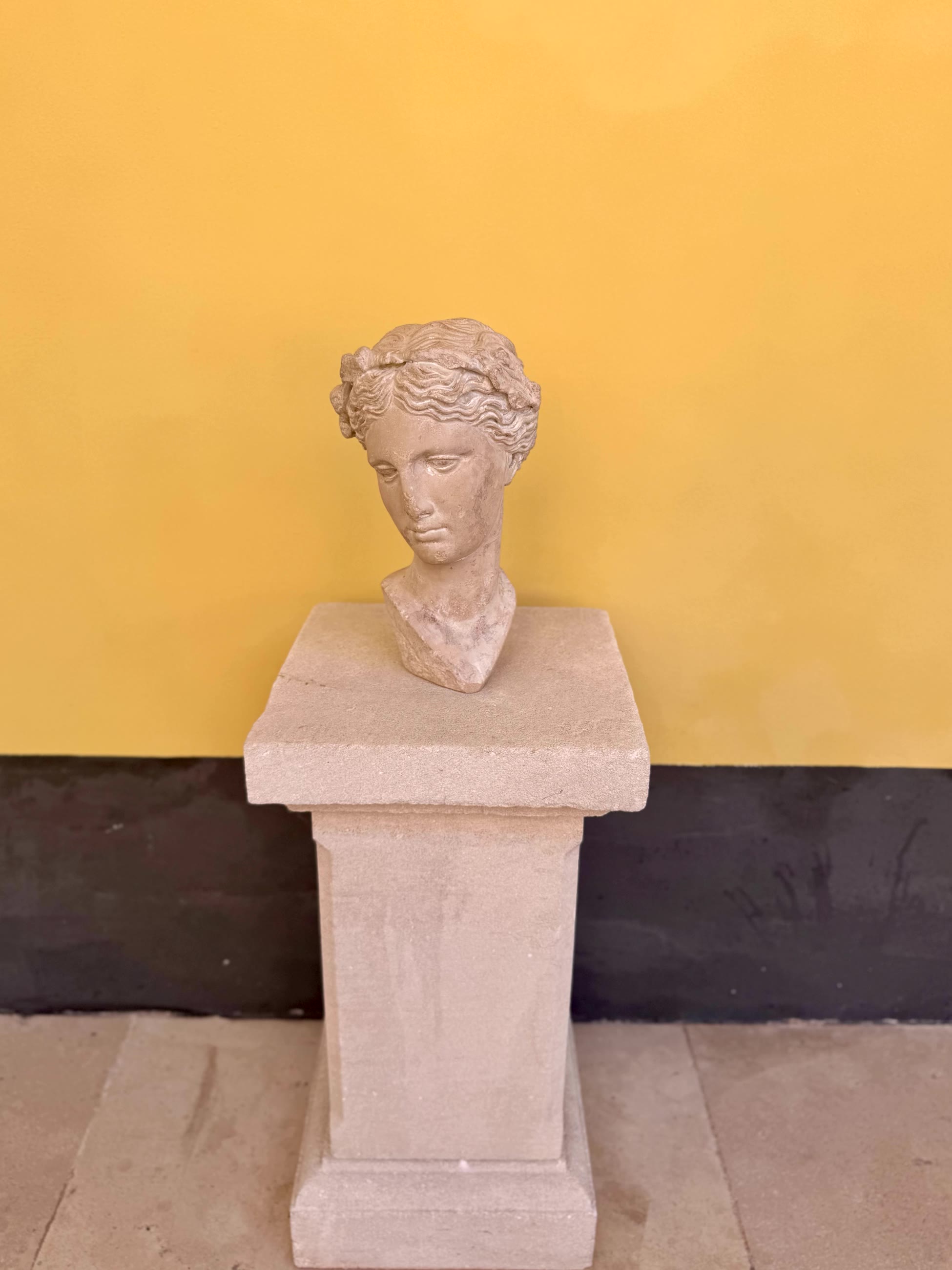
A classical stone head on a pedestal against a yellow wall, Hôtel du Couvent
Studio Cronborg · Field Notes · No. 03

Moved in time

Hôtel du Couvent · Nice

Three apricots in a bowl at Hôtel du Couvent, a convent of 1610 restored on the hill above Nice. On enclosure, ripeness, and the answer to longevity.

There were three apricots in the bowl. There were three of us.

No one said so. White china, small navy flowers, the bowl lined with leaves from the garden, set beside a note written by hand. We had not put down our bags. The house had already counted us, and answered in fruit.

The apricots were ripe. Not preserved, not flown in out of season to impress. Ripe, and meant for that day, because the next day they would be gone. The Greeks had a word for it. ὡραῖος, hōraîos. We translate it as beautiful, but it meant ripe, in season, arrived at its right moment. A thing was beautiful when it had ripened into its hour. The apricots were hōraîos. So was everything else.
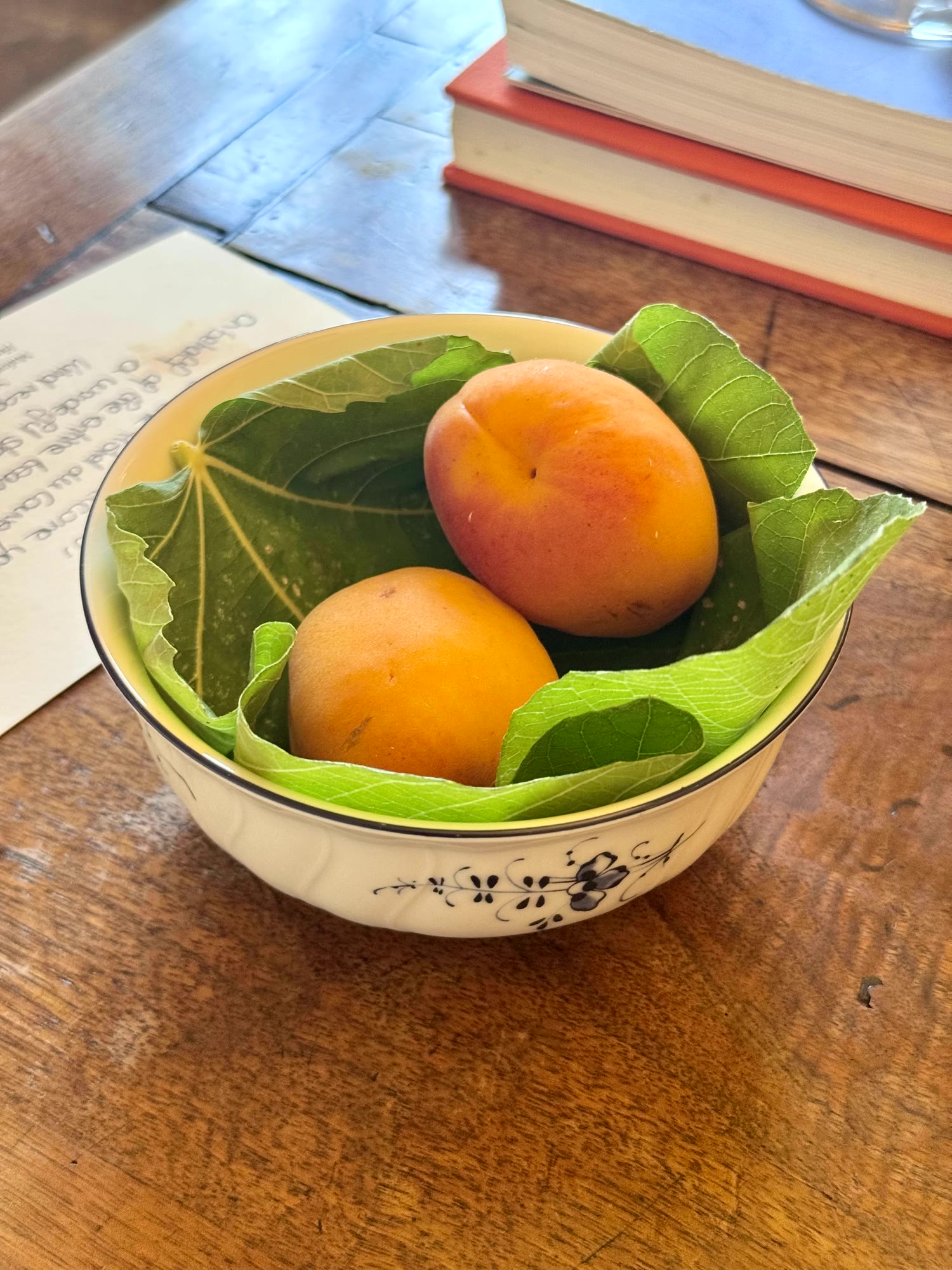
Three ripe apricots in a bowl lined with leaves from the garden, Hôtel du Couvent

The bowl, lined with leaves from the garden. Figs ripening into their hour above the pool.

The keys hang on a worn leather lanyard, known by touch. Madeleines wait in the courtyard, still warm. You sit, you eat one, and you have already slowed down without deciding to.

Hôtel du Couvent does not add. It subtracts. There are no televisions. The walls are lime and whitewash and stone, the materials the nuns used to build the place, put back by the people who restored it. The Mediterranean is a few streets away and the house has turned its back on it. You arrive at a hotel on the Riviera and the hotel has closed the door on the Riviera. It feels, at once, like a gift.

The word explains why. Cloister comes from the Latin claustrum, from claudere, to shut. It named the enclosing wall first, then the whole house behind the wall. Our most peaceful architecture is called, at the root, the closed thing. We have always known the price of peace is a shut door. We prefer not to say it.

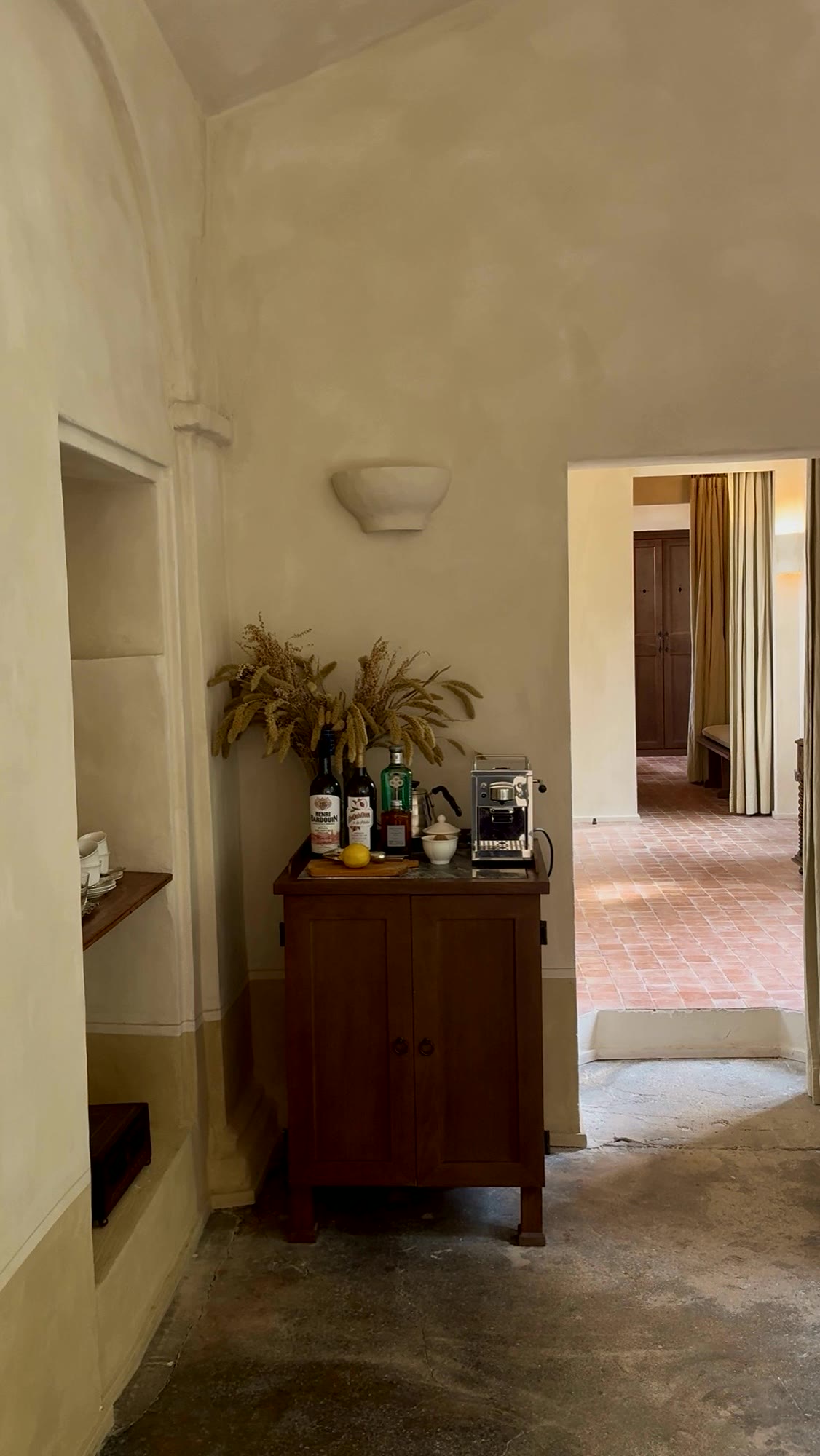
A lime plaster corridor inside Hôtel du Couvent, terracotta floors and a wooden cabinet

The house that turned its back on the Riviera

The house was a convent of the Visitation, founded in 1610 by Francis de Sales and Jane de Chantal. The order was not built to withdraw. It was built to go out, to leave the house and tend the sick and the poor in their homes. Enclosure was imposed on it from outside, by a Church that could not imagine consecrated women who were not shut in. Francis de Sales gave up the fight in a single line. God has had his way.

An order that wanted the world was made to close the door on it. And across four hundred years those women turned the constraint into the thing itself. The wall meant to confine them became the shape of their freedom.

The guest repeats it in miniature. You arrive still meaning to go out. The house shuts the door for you. By the second morning the enclosure you did not choose is the thing you came for. The wall was never keeping you in. It was keeping the century out.

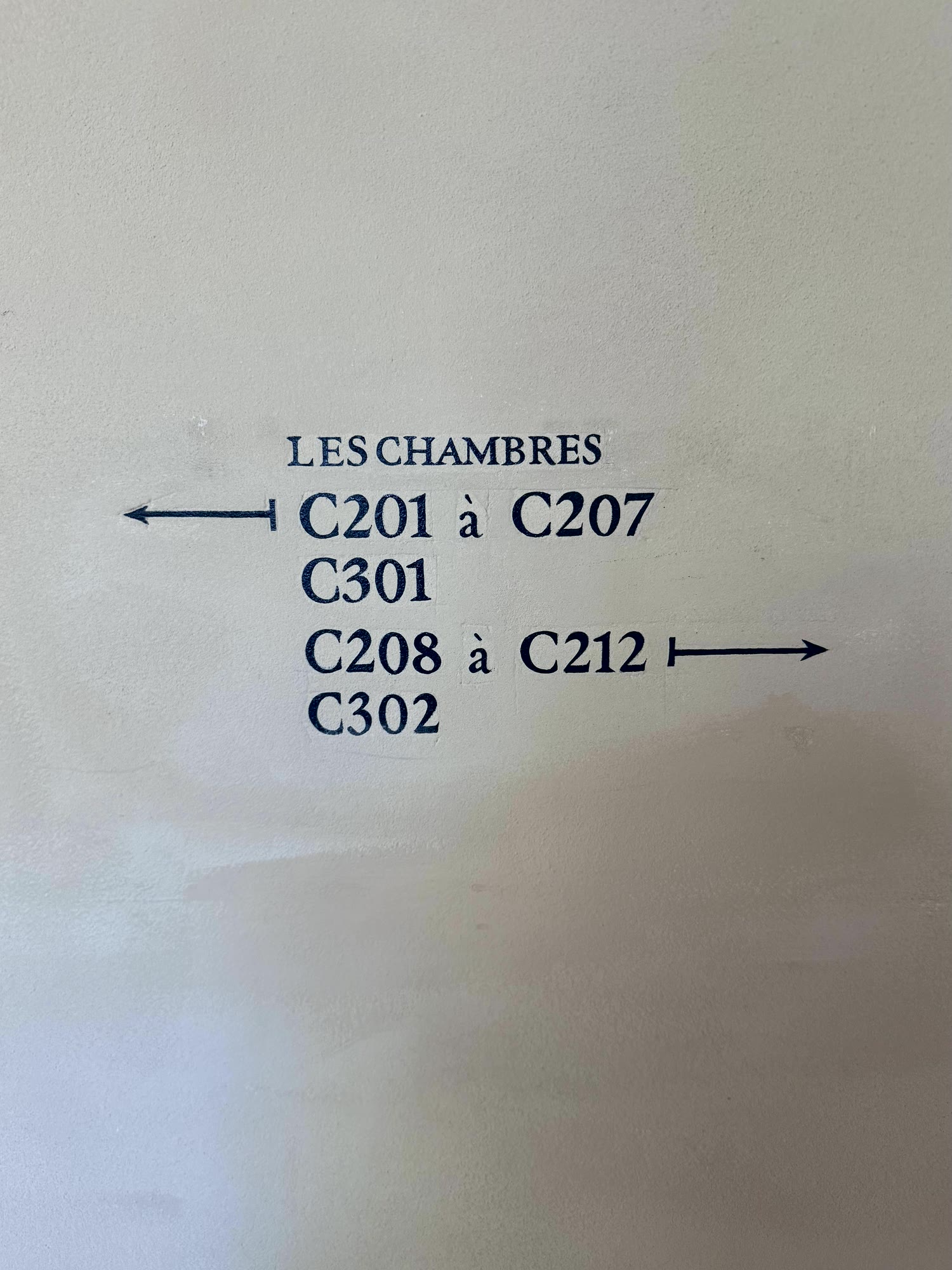
Hand-painted room numbers on lime plaster, Les Chambres, Hôtel du Couvent

Les chambres · the cloister garden

Because the house keeps a rhythm you did not set. The baths run in the old Roman order, warm to hot to cold. In the spa every product comes from a house founded by a woman, in honour of the women whose house this is. The herbalist keeps hours in the cloister, tending the same physic garden the sisters kept. The parterres climb the hill in the order the sisters set them, vegetables, then herbs, and at the top, above the food and the medicine, a parterre kept for contemplation. The garden feeds the body, then treats it, then turns to the soul. Breakfast is local, considered, much of it from the garden, all of it made in the house. The fruit arrives when the fruit is ripe. You slot into a horarium four centuries older than you, a monastic day once measured by a bell. The monks and nuns took a vow we have forgotten, stabilitas, the promise to stay.

Byung-Chul Han has the line for it. Rituals are to time what a home is to space. They render time habitable. Modern time, he writes, is an erratic stream that rushes off, a run of point-like presents with nothing to stand on. Couvent gives you walls in space and walls in time, and they are the same wall. Enclosure is the name for both.

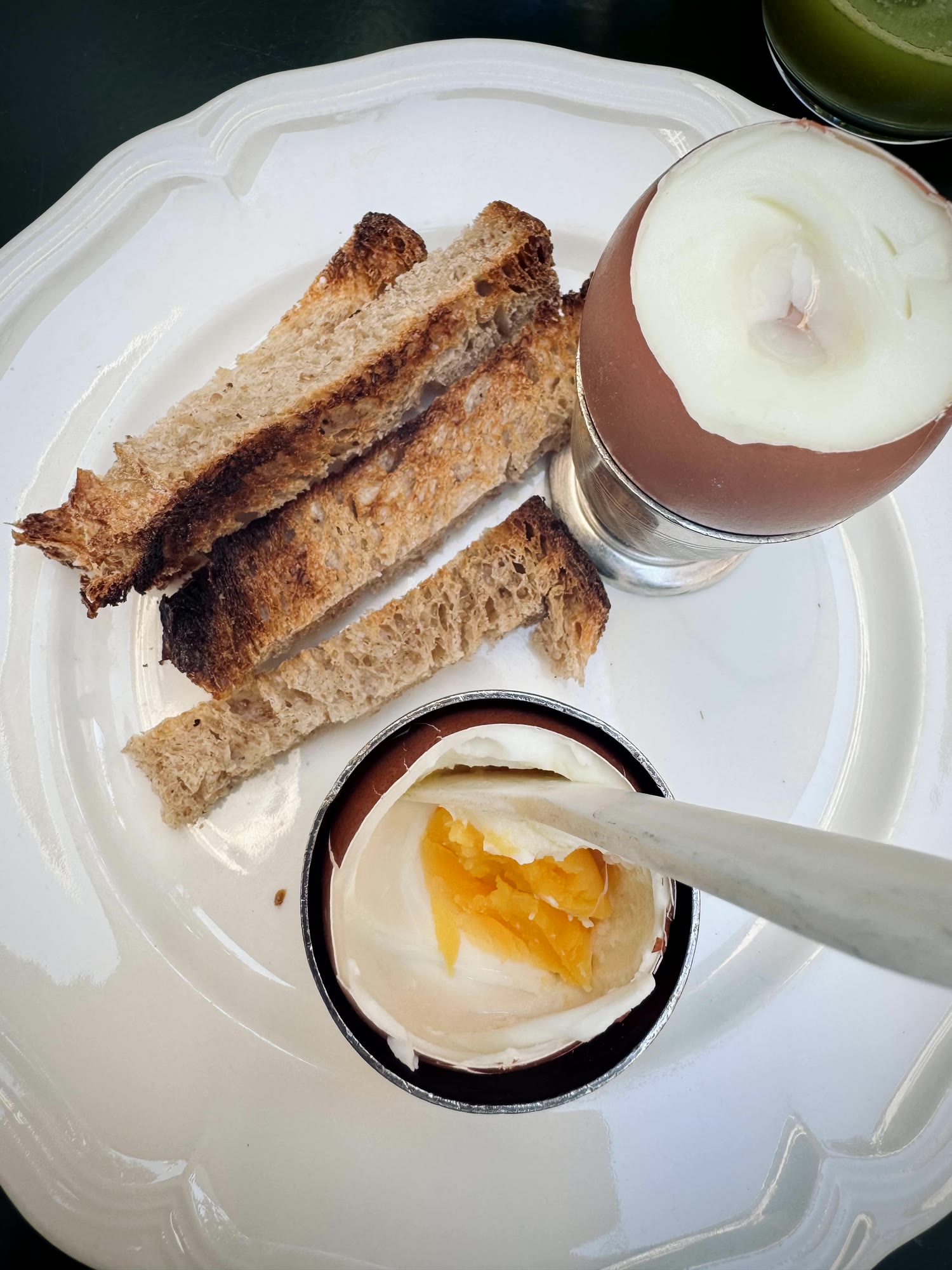
A soft-boiled egg with toast on white china, breakfast made in the house
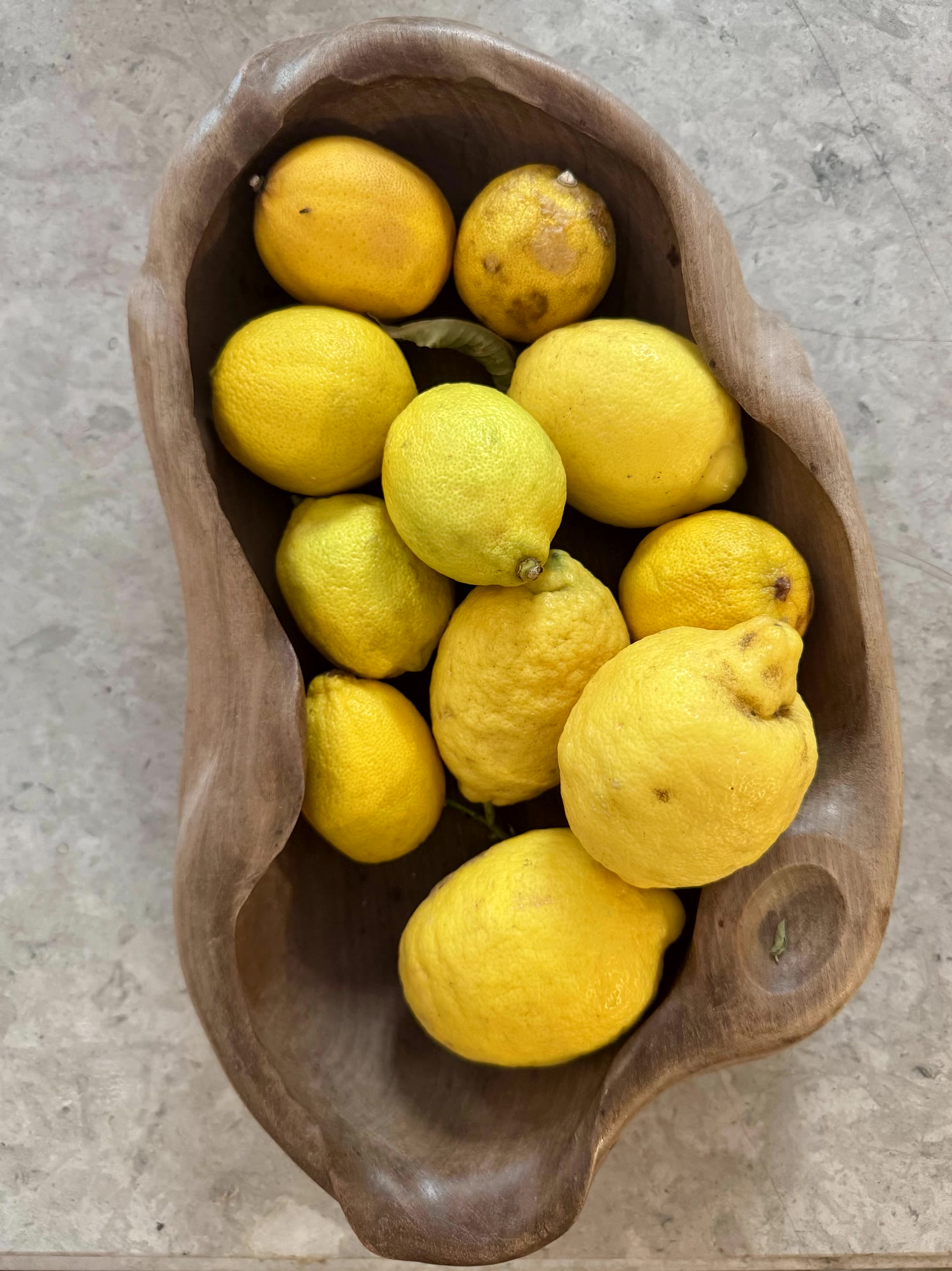
Lemons in a carved wooden bowl on stone

Breakfast, made in the house · the fruit arrives ripe

The garden at dusk. The century on the far side of the wall.

The maker's hand is everywhere. The written note. The warm bread, out of the old oven the sisters baked in, still standing in the bakery. The lime laid on by hand. The leather worn soft. Nothing here is smooth or instant, and the friction is the point. Walter Benjamin called it aura, the presence a thing keeps when it was made once, by someone, in a place, and never reproduced. Couvent is a house with its aura intact.

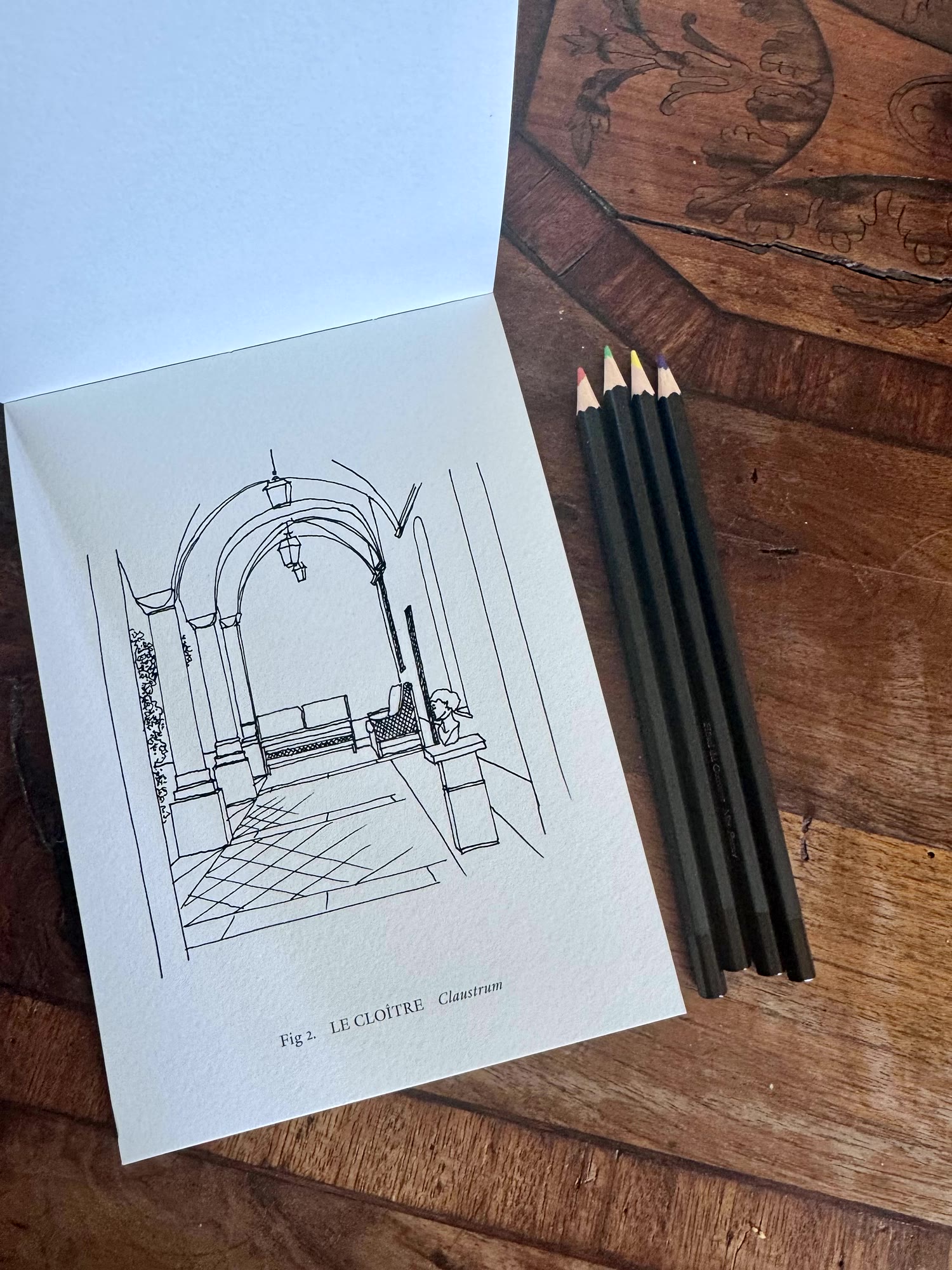
And there is culture, laid out like furniture. Books in the room and through the cloister. Sculpture. Art on the walls. On the desk, a chic colouring book and a set of pens. The house does not entertain you. It hands you back your own attention. The colouring book is the sharpest object in the room. Analogue, slow, the hands busy and the mind quiet. Contemplation disguised as play.

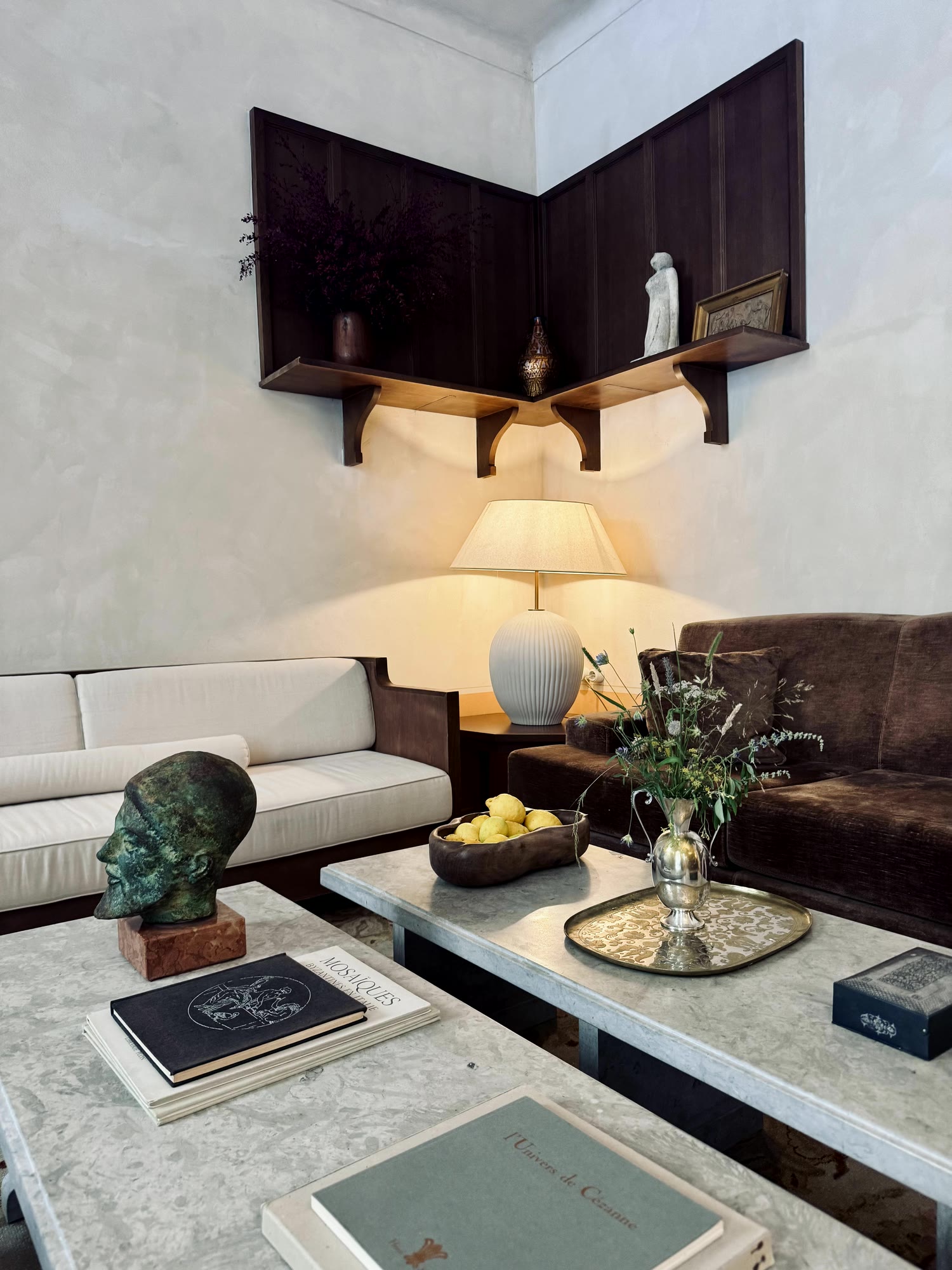
The salon, books on marble, a bronze head, a velvet sofa
The cloister colouring book and pencils on the desk, Hôtel du Couvent
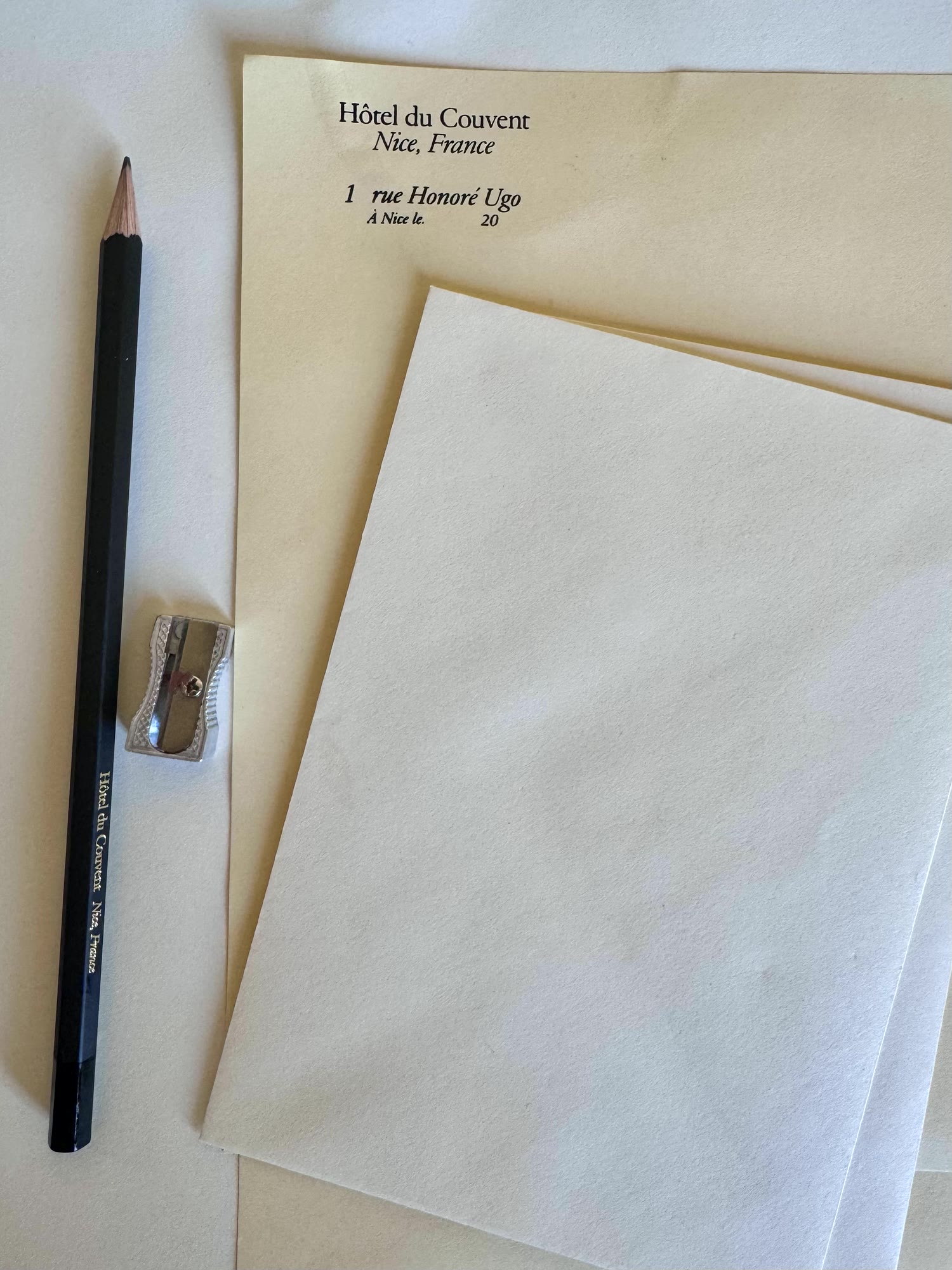
Hôtel du Couvent letterhead, a pencil and a sharpener

Culture, laid out like furniture

The film · Hôtel du Couvent, July 2026

This time I am reading Mrs Dalloway at the top of the garden, in the parterre the sisters kept for contemplation, on the hill above Nice. The church bells tolled while I read. It is the perfect book. Woolf's novel is a single London day hammered into shape by Big Ben. The leaden circles dissolved in the air. A mind straining to hold its own time against the weight of the hour. And I am reading it in a convent where the bell still rings. The tyranny of the hour, read from inside the one place that switches the hour off. In the book the circles form all day. Here they never form. The hour does not come to collect you.

Outside it is not silent. Birdsong, bees, leaves turning in a light wind, the pool set into the terrace. What is missing is the century. No traffic, no engine, no notification. Only the old sounds cleared the wall, the same the sisters would have heard. And in the room, later, not even those. The town is at full volume on the far side of the wall, and inside there is no sound at all. You can hear the century stop at the stone.

At Hôtel du Couvent you are moved in time. Set down in another century's tempo, and left to feel your own duration again, which is the thing Clarissa Dalloway spends her London day fighting to keep.

The pool set into the terrace, the town at full volume on the far side of the wall.

Luxury has decided its next frontier is the body. The clinic and the resort sell longevity now, perfect control of your health, the protocol, the panel, the added decade. The optimised body as the last luxury object.

Couvent shows how thin that is. Ask the question the trend cannot answer. Once you have bought the extra years, what are the years for? An optimised, extended, uncultivated life is a longer emptiness. More of a thing that was never full.

Three differences say it all.

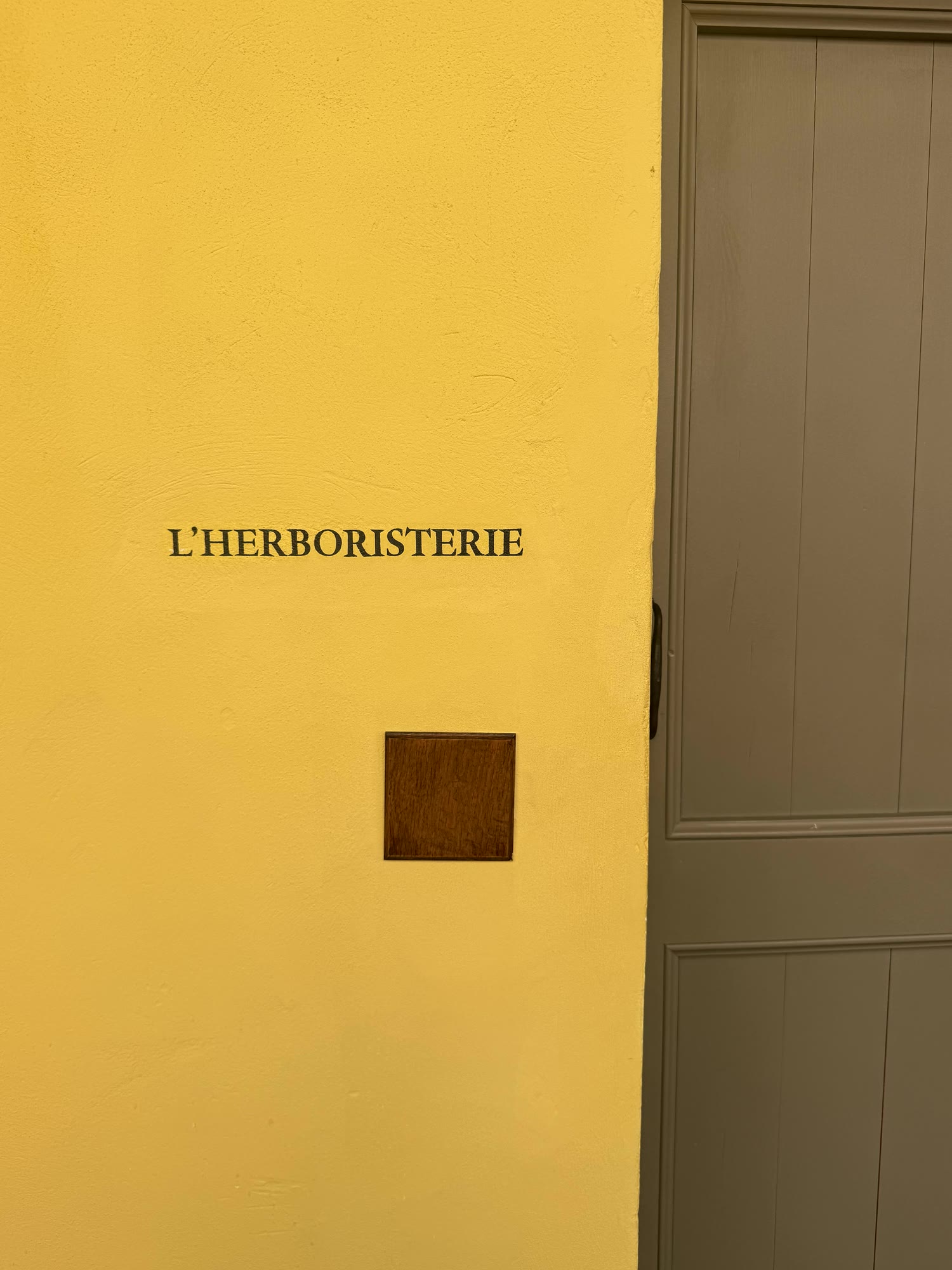
The yellow door of the herboristerie, Hôtel du Couvent
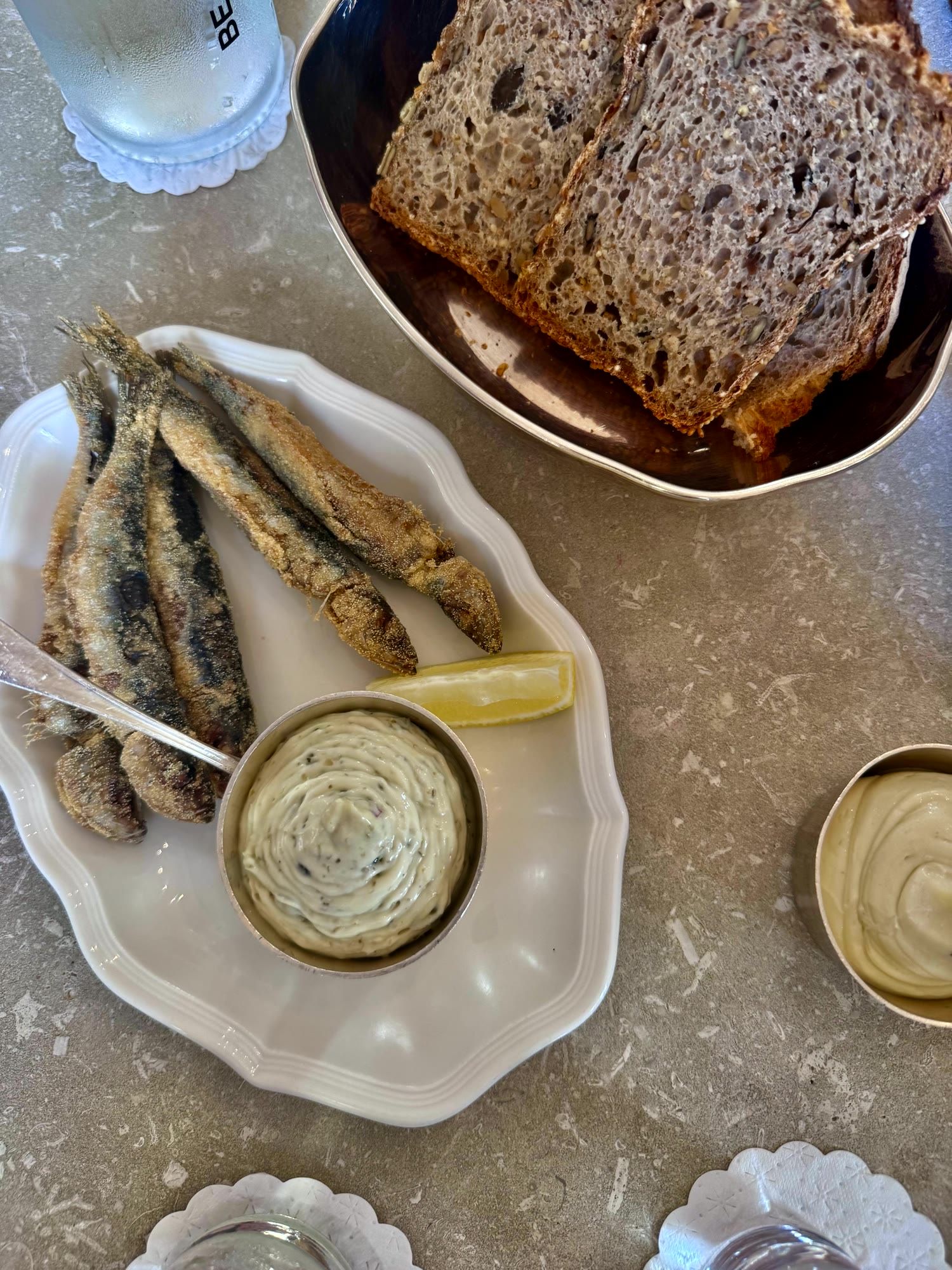
Petite friture with lemon and aioli, bread from the house

The physic garden and the table

Control, against surrender. The wellness reflex makes you the anxious manager of your own body, until even rest becomes work. Couvent relieves you of the managing. You give yourself to a rhythm you did not set, and the surrender is the peace. Control exhausts. Surrender restores.

Quantity, against ripeness. Longevity wants more time. Hōraîos wants the right time. You do not preserve the apricot. You eat it ripe, because it will not last, and that is exactly why it is beautiful. A fruit that never falls is a fruit not worth eating.

Cultivation, against optimisation. Culture, cultivated, cult, all descend from the Latin colere, to tend, to till, to worship. The convent did both at once. It cultivated a garden and it cultivated souls. To be cultured is to have been tended, slowly, in a season, by a hand. Optimisation is the machine version of the same verb, fast, controlled, endless, rootless. Couvent cultivates you the way it still cultivates its garden. The clinic optimises you the way a factory tunes a line. One is agriculture. The other is engineering.

The rarest thing a house can offer now is not more. Not more access, not more control, not more years. It is a wall, permission to sit behind it, and the return of your own presence. To be cultured, cultivated, alive, and in time. That is the luxury the longevity resort cannot sell.

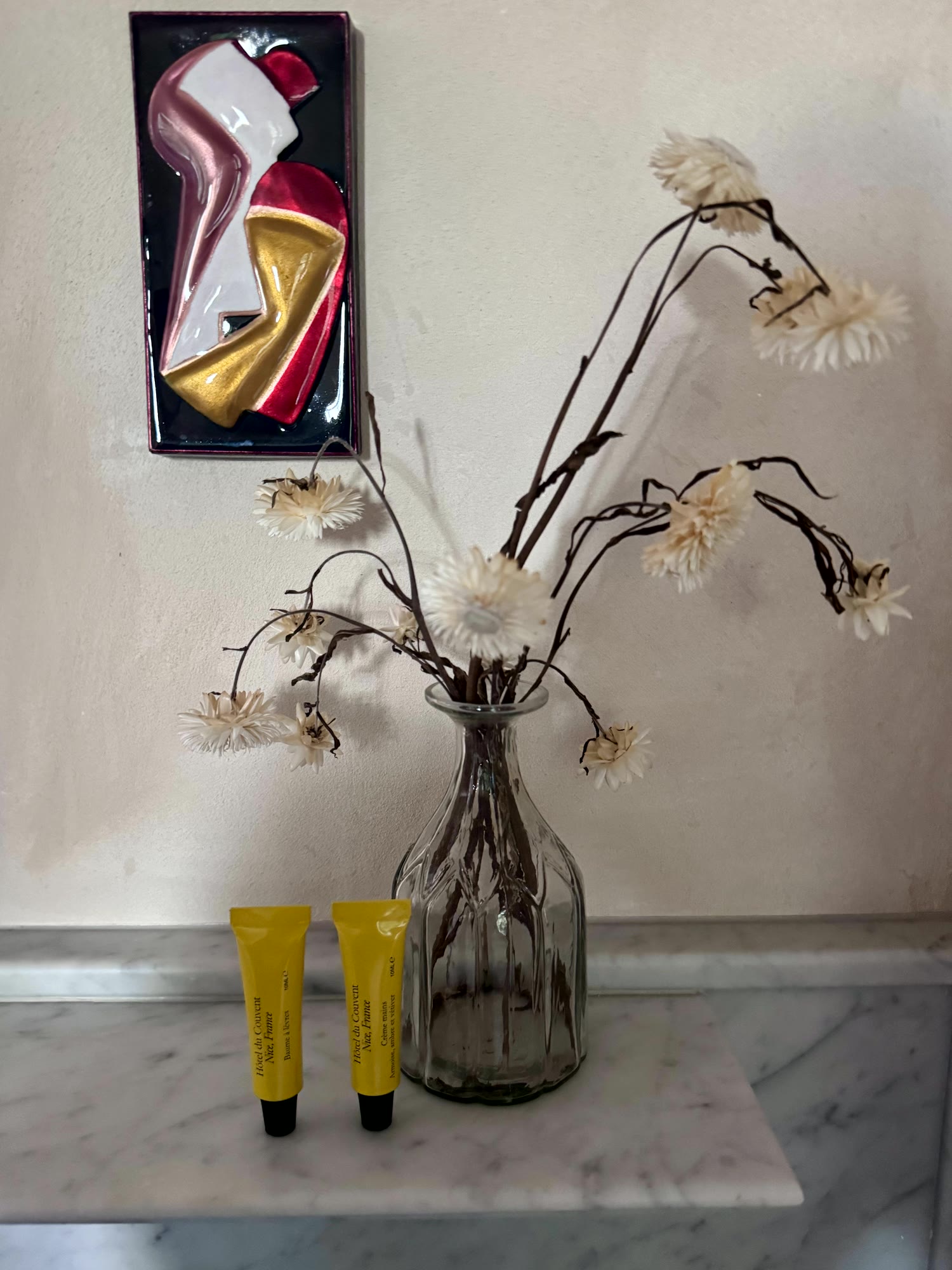
Dried flowers in a glass vase on marble, the room at Hôtel du Couvent

The room, later

The apricots were gone by the second day. That was the point of them.

And the room, when I went back up to it, was completely silent.

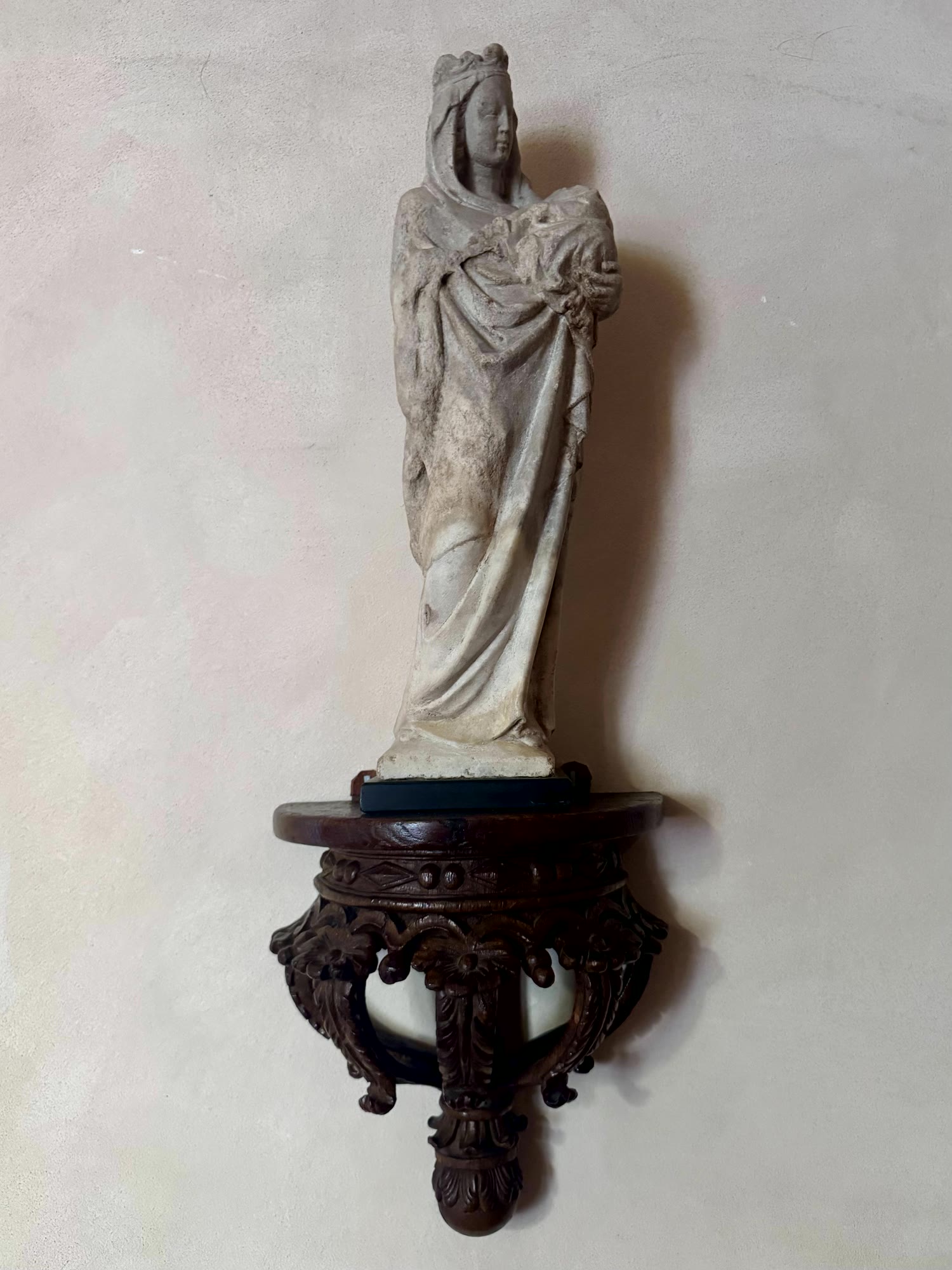
A stone Madonna on a carved wooden bracket against lime plaster

In their honour

Stayed
Hôtel du Couvent, Vieux Nice, a convent of the Visitation founded in 1610
Bathed
The old Roman order, warm to hot to cold
Read
Mrs Dalloway, in the contemplation parterre, while the bells tolled below
Best hour
The second morning, when the enclosure becomes what you came for
Season
Mid-July, ripe apricots, birdsong and bees, the century switched off
The Field Study continues

Next · Grasse

Return to the route