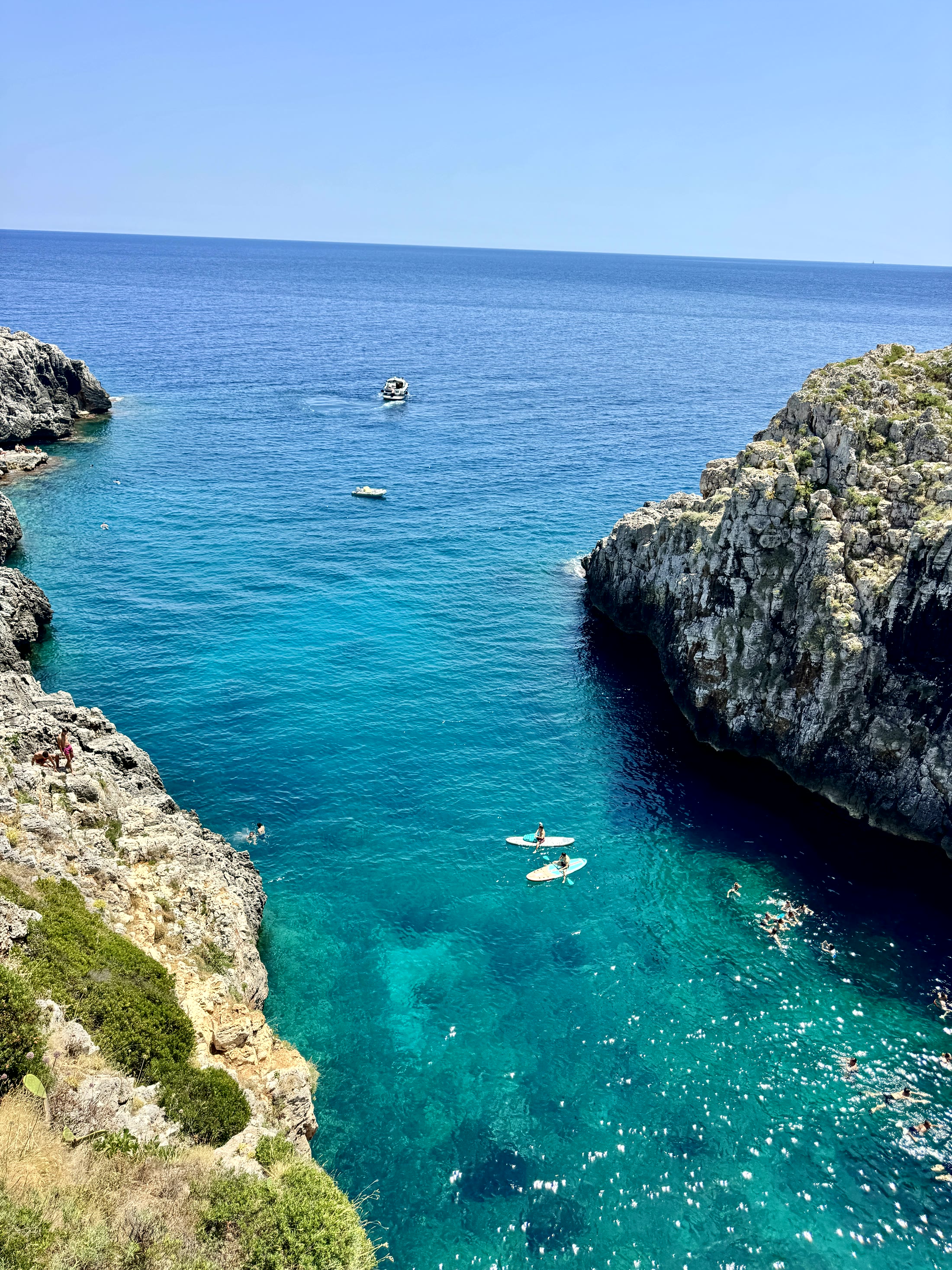
A turquoise inlet between limestone cliffs on the Adriatic coast of the Salento, swimmers and small boats in the water
Studio Cronborg · Field Notes · No. 07

Nothing here was designed

The Salento · July 2026

Days in Puglia from Borgo Egnazia, the masseria conversion at its most complete, driving south into the deep Salento. On necessity become form, the paper saints of Lecce, the lace of Casamassella, and the olive trees that put luxury's oldest promise to the test.

The fields around the masseria read rust and silver-green, terra rossa over limestone karst. The land is porous. Rain drops through the rock, so there are no rivers, so there were never river cities, never the mercantile fortunes that built Tuscany. What the Salento built instead was a landscape of cisterns, dry-stone walls and pajare, the conical field huts raised without mortar from the stones cleared to make the field. Nothing brought in. Everything rearranged.

Every theory of luxury begins in surplus. Veblen's leisure class signalled through what it could afford to waste. Bataille called expenditure glorious. The whole apparatus assumes an economy with something left over. The Salento is the counter-case, a landscape of recognised beauty produced by a culture that had nothing to spare, where every gesture that now reads as style began as a solution. The dry-stone wall is beautiful because there was nowhere else to put the stones. Fave e cicoria is one of the great dishes of Europe because there was no meat. The Priorat performs the same trick with slate. This is the most interesting laboratory in Europe for the question of whether luxury needs surplus at all.
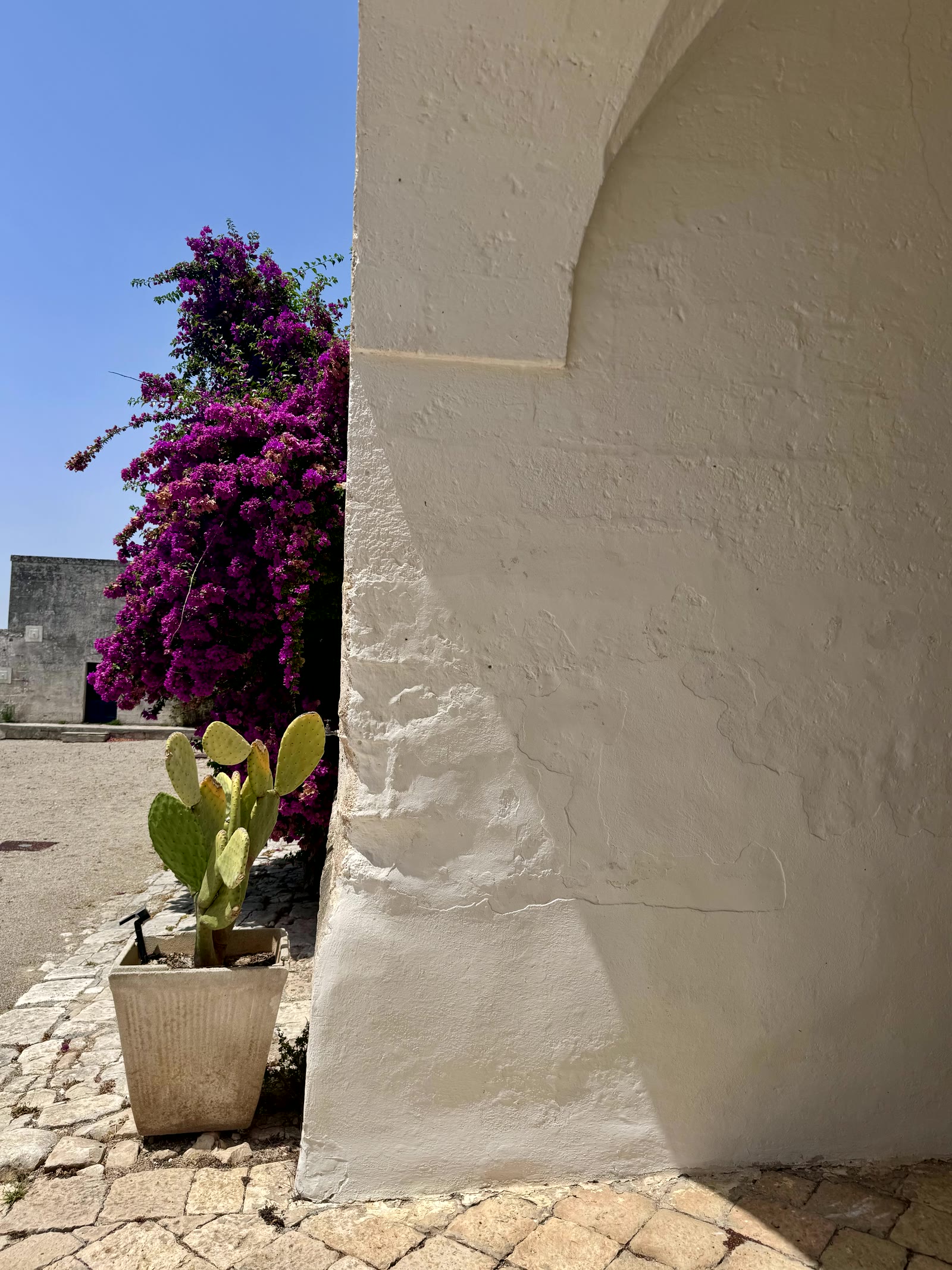
A whitewashed masseria corner with bougainvillea in bloom and a potted prickly pear on pale stone

Nothing brought in · everything rearranged

The masseria is where the two economies meet. It was a fortified farm, built by people who could be raided from the sea, and every quality the hotel brochures now photograph was load-bearing. The thickness of the wall was structural. The lime wash was hygiene. The enclosed court was survival. The conversion began in the Valle d'Itria, and Borgo Egnazia hosting the G7 in 2024 made it official. The wall's use was exhausted long ago. The sign remained, and the sign is what the room rate buys. Baudrillard described the mechanism half a century ago, the object emptied of function and refilled with meaning. Nothing here was designed. Everything is now design.

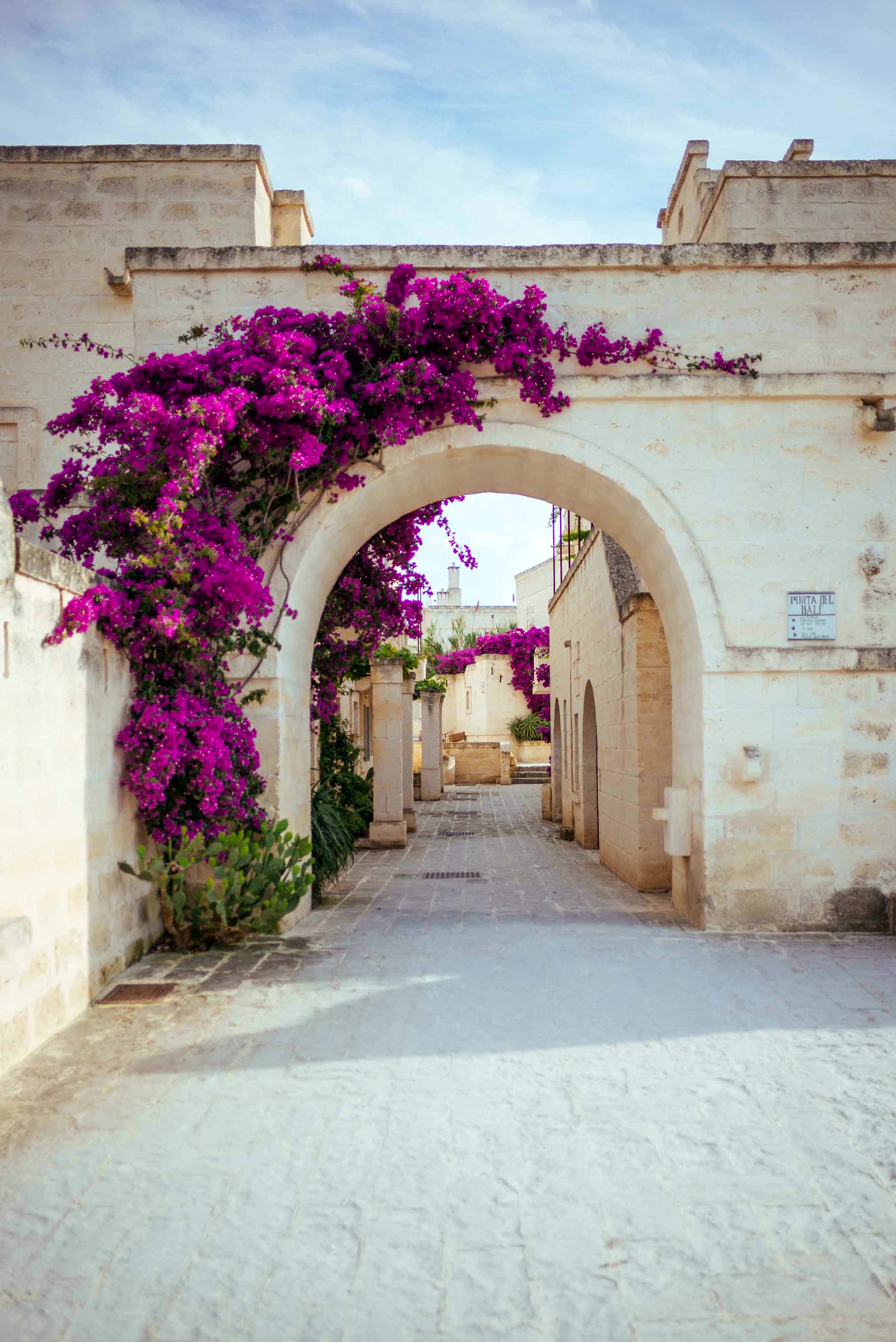
The Porta del Balì at Borgo Egnazia, bougainvillea flowering over a pale stone arch and whitewashed lane
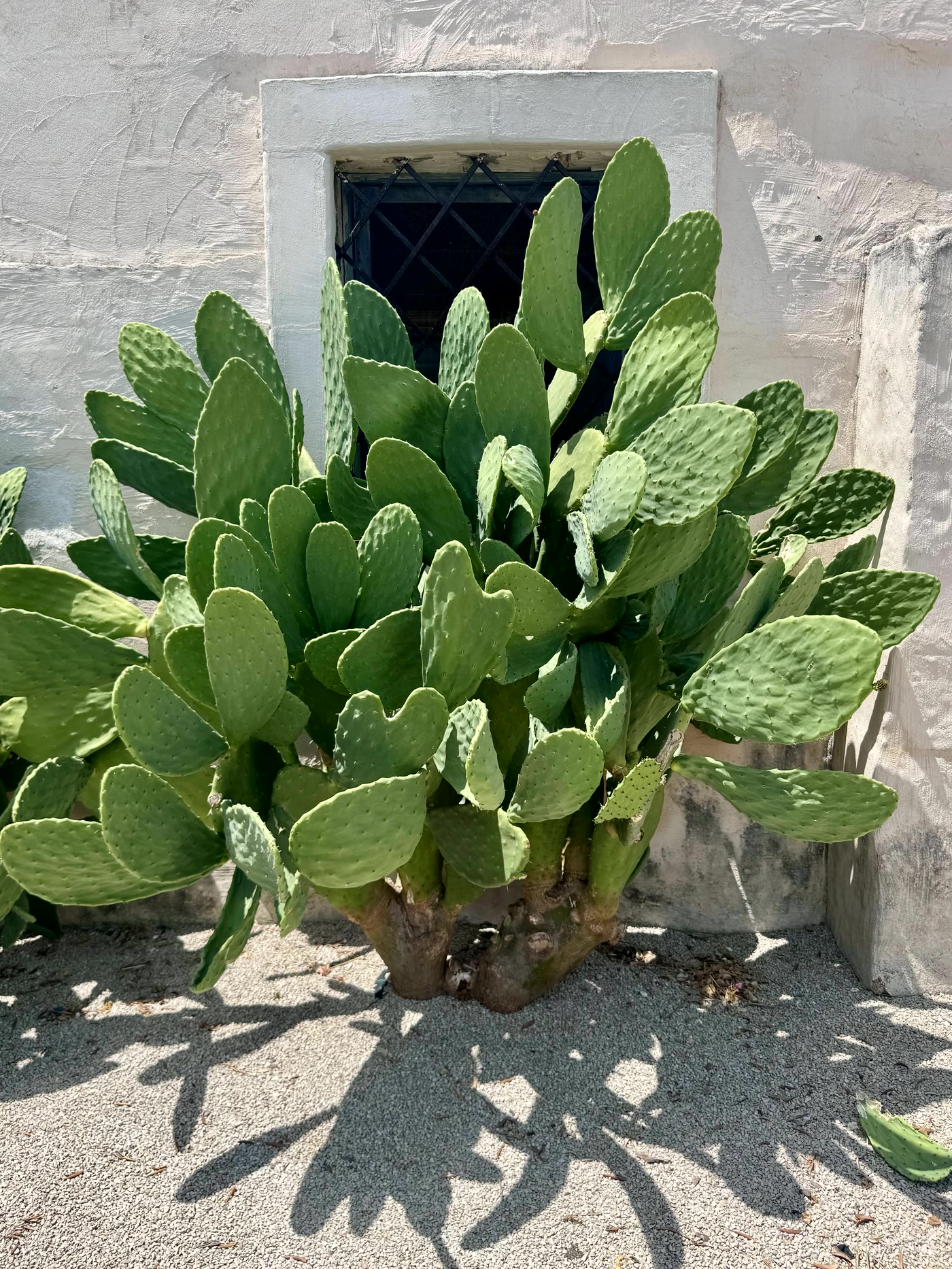
A prickly pear pressed against a whitewashed wall beneath a barred window

Borgo Egnazia, a village raised in the image of necessity, and the prickly pear against the lime wash.

Fashion already knows this coast, though the relationship runs one way in each direction. The region exports directors and imports spectacles. Riccardo Tisci, born in Taranto, ran Givenchy for twelve years and then Burberry. Ennio Capasa left Lecce for Yohji Yamamoto's studio and returned to found Costume National, and his brother Carlo now chairs the Camera della Moda, so the governing body of Italian fashion answers to a Leccese. Alessandro Vigilante, born here in 1982, directs Rochas. Meanwhile Dolce&Gabbana staged Alta Moda among the trulli of Alberobello in 2023 and called it the most authentic show of their lives. The talent leaves. The shows arrive. Both movements are extractions.

Castro from the high road · the Adriatic side, rock over sand

In Lecce the saints are paper. The parishes were too poor for marble, so the workshops developed cartapesta, papier-mâché worked with straw, plaster and fire until it reads as carved wood. The material is worthless. The effect is total. The entire value of the object is the labour, the hours of a hand, and nothing else. Benjamin located aura in the original's unique existence in time and place. Cartapesta is the limit case, aura with no material substrate whatsoever, produced by work alone.

The same value theory runs the workshops that stayed. G. Inglese has made shirts by hand in Ginosa since 1955 and dresses clients in Tokyo and New York without ever having left the town. Tagliatore grew out of a shoe-cutter's bench in Martina Franca, the craftsman's nickname became the brand. Puglia's native luxury is labour, sold by the hour of the hand, sometimes under its own name and often under other people's.

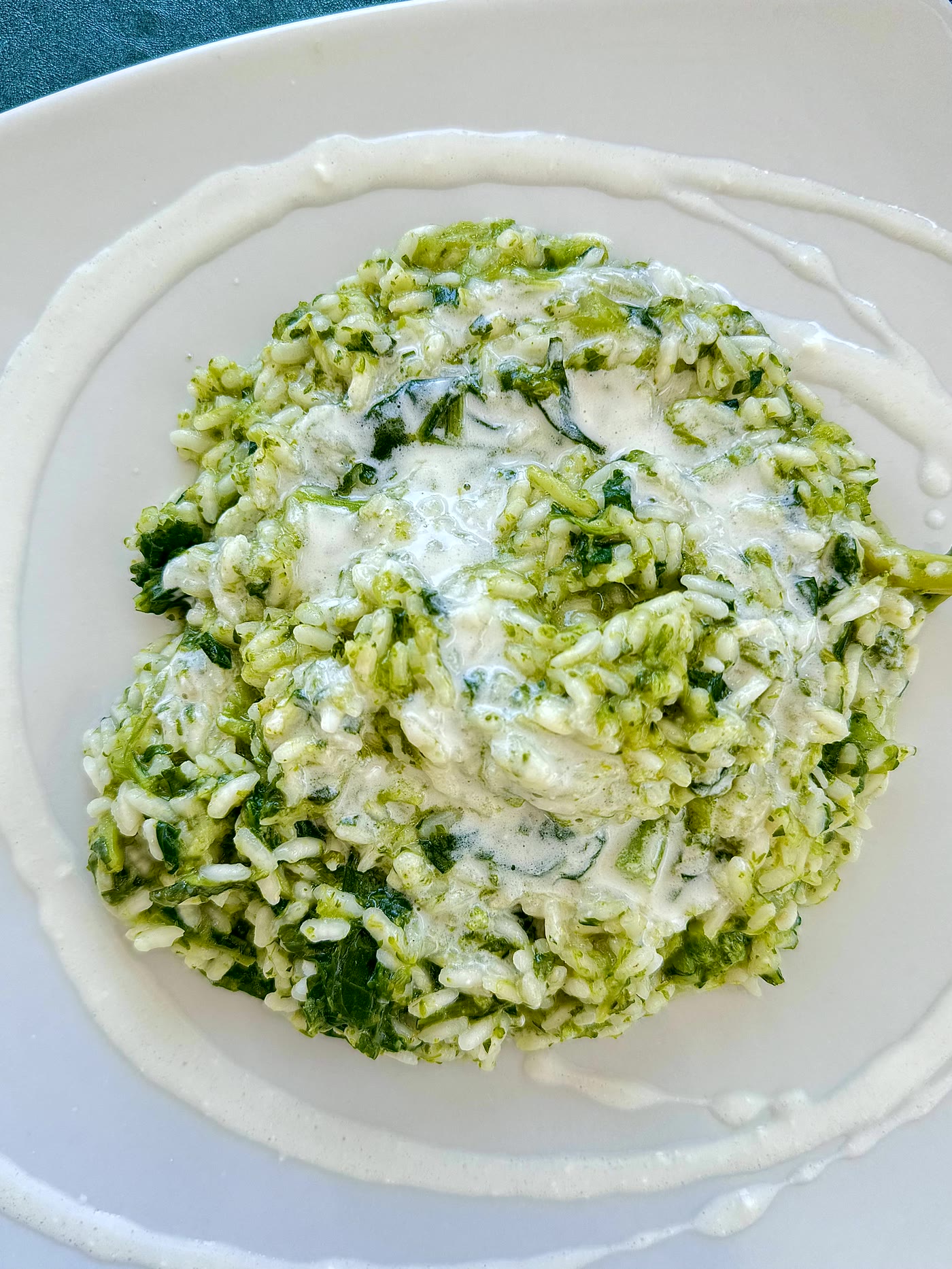
A plate of green zucchini rice under a veil of cream on white ceramic
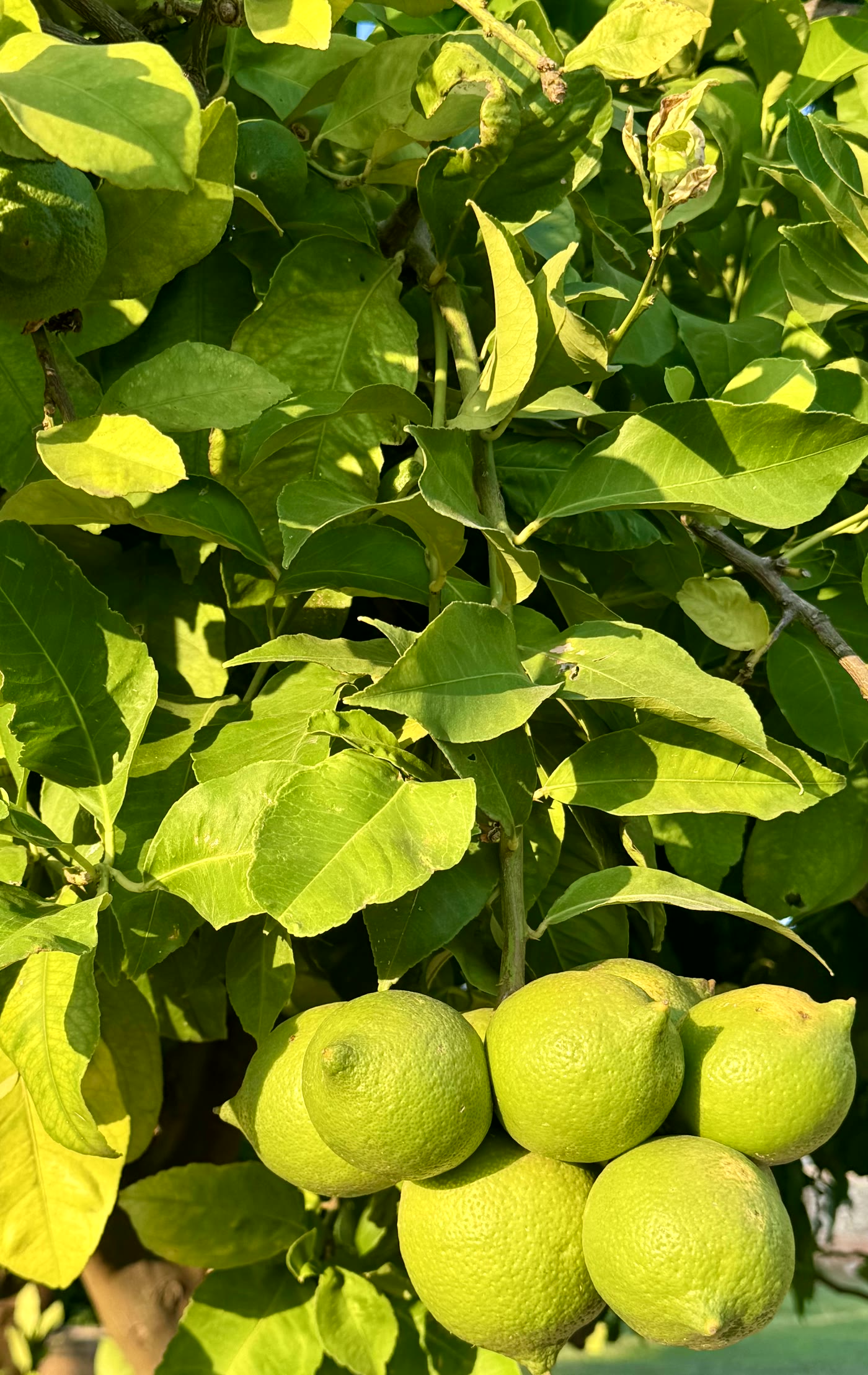
A heavy cluster of green lemons in dense leaf
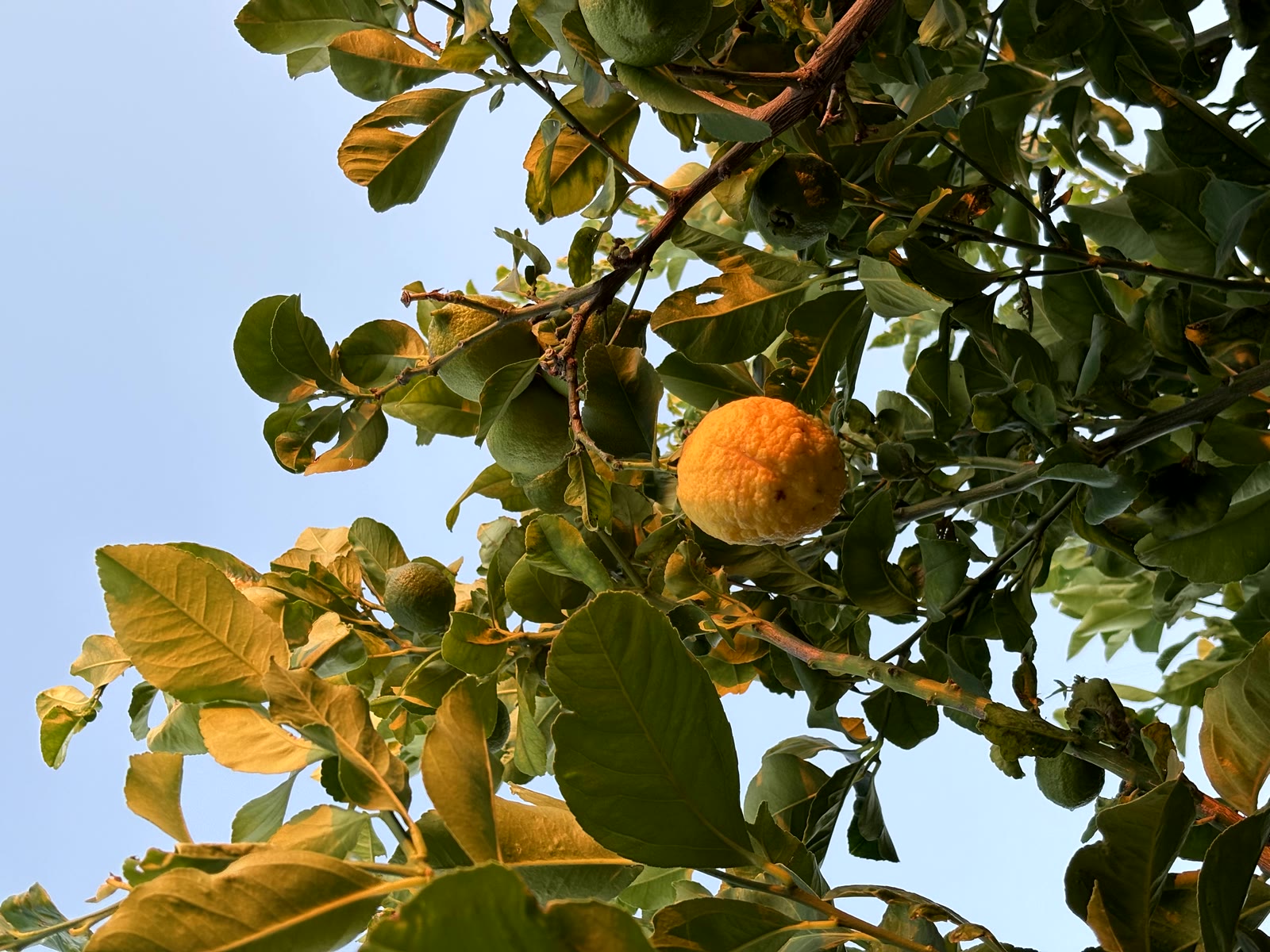
A bitter orange ripening against the sky in a citrus tree

Cucina povera · the grove and the table

The lace tells the story with the longest arc. In 1901 Carolina and Etta de Viti de Marco founded a weaving school at Casamassella so that Salentine women could earn, an emancipation project in the form of a craft school, today the Fondazione Le Costantine, still working hand looms and tombolo lace among the olives. In July 2021 Dior showed its Cruise collection in the Piazza del Duomo in Lecce, under the luminarie, to the rhythm of the pizzica, in fabrics woven at Casamassella. Maria Grazia Chiuri's father was born in Tricase in 1931. Her daughter was born in the hospital at Gagliano del Capo. The show read as spectacle and was in fact a homecoming. When the largest couture house in the world needed to renew its aura it came to the poorest corner of Italy and bought handwork from a foundation created to fight that poverty. The aura is where the hand still is.

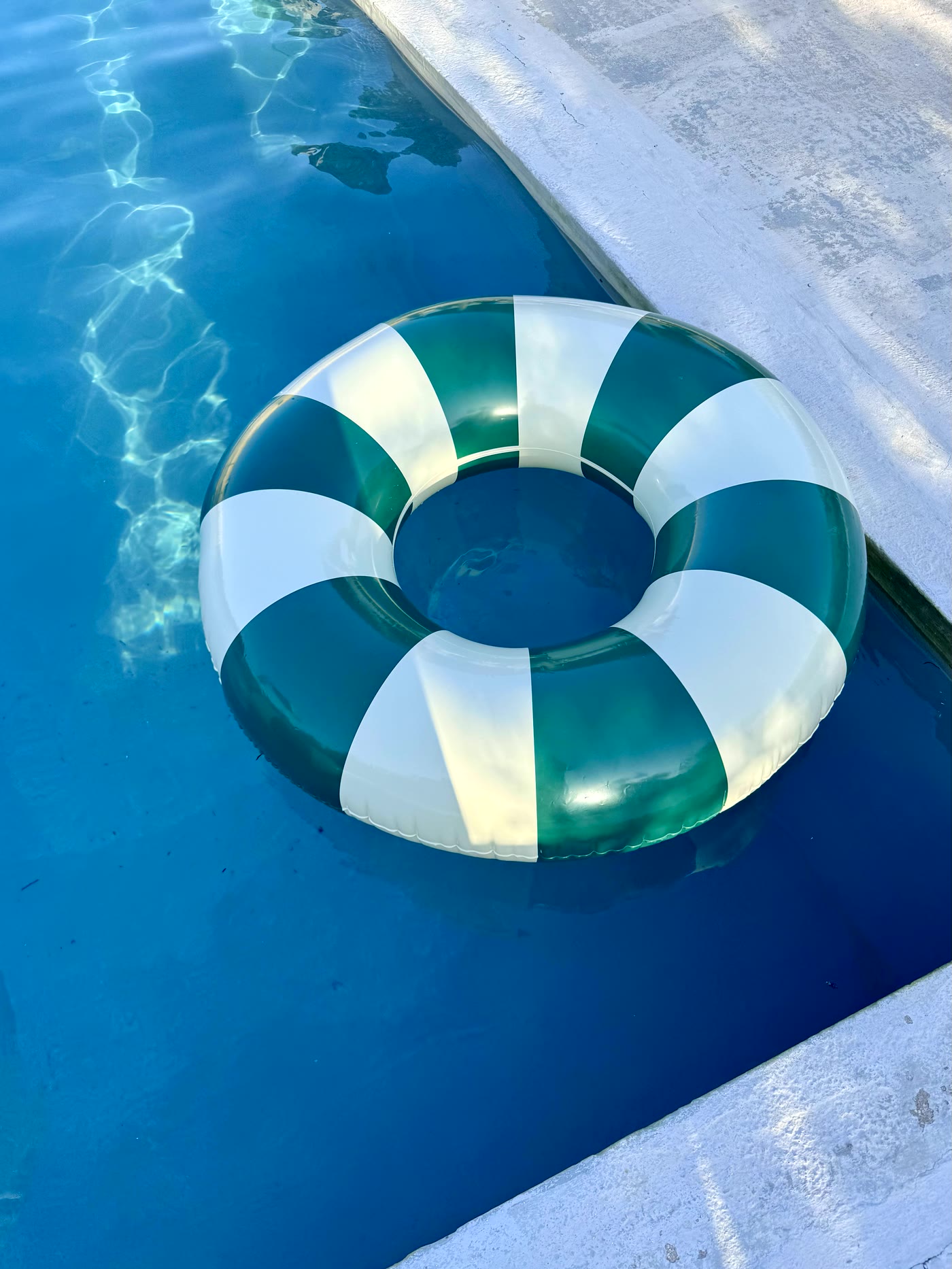
A green and white striped swim ring floating on deep blue pool water

High summer at the masseria · green and white on deep blue

The rock pool at Marina Serra · a striped towel on the limestone

Then the olives, which put the whole model under stress. Luxury's deepest promise is permanence, the thing that outlasts you, the register the houses now sell harder than beauty itself. Xylella fastidiosa arrived in 2013 and killed millions of trees across the lower Salento, some of them a thousand years old. Driving south you pass the skeletons. The permanence was falsified in a single decade, and the aesthetic survived anyway, an image that outlived its referent. The replanted cultivars won't look like this for a hundred years. No house would survive that test of its own promise. The Salento is taking it in public.

So the state of the market, stated in stone. Luxury has exhausted its own surplus aesthetics and is now buying the forms of necessity, the wall, the wash, the povera table, because constraint is the one thing money can't perform. The Salento holds the largest remaining stock of it, in lace, in shirts, in paper saints, in walls. The offer on the table is to buy the form by removing the constraint that made it. When only the form remains, is it still beautiful, or is it scenography. What the Salento sells will decide what it is.

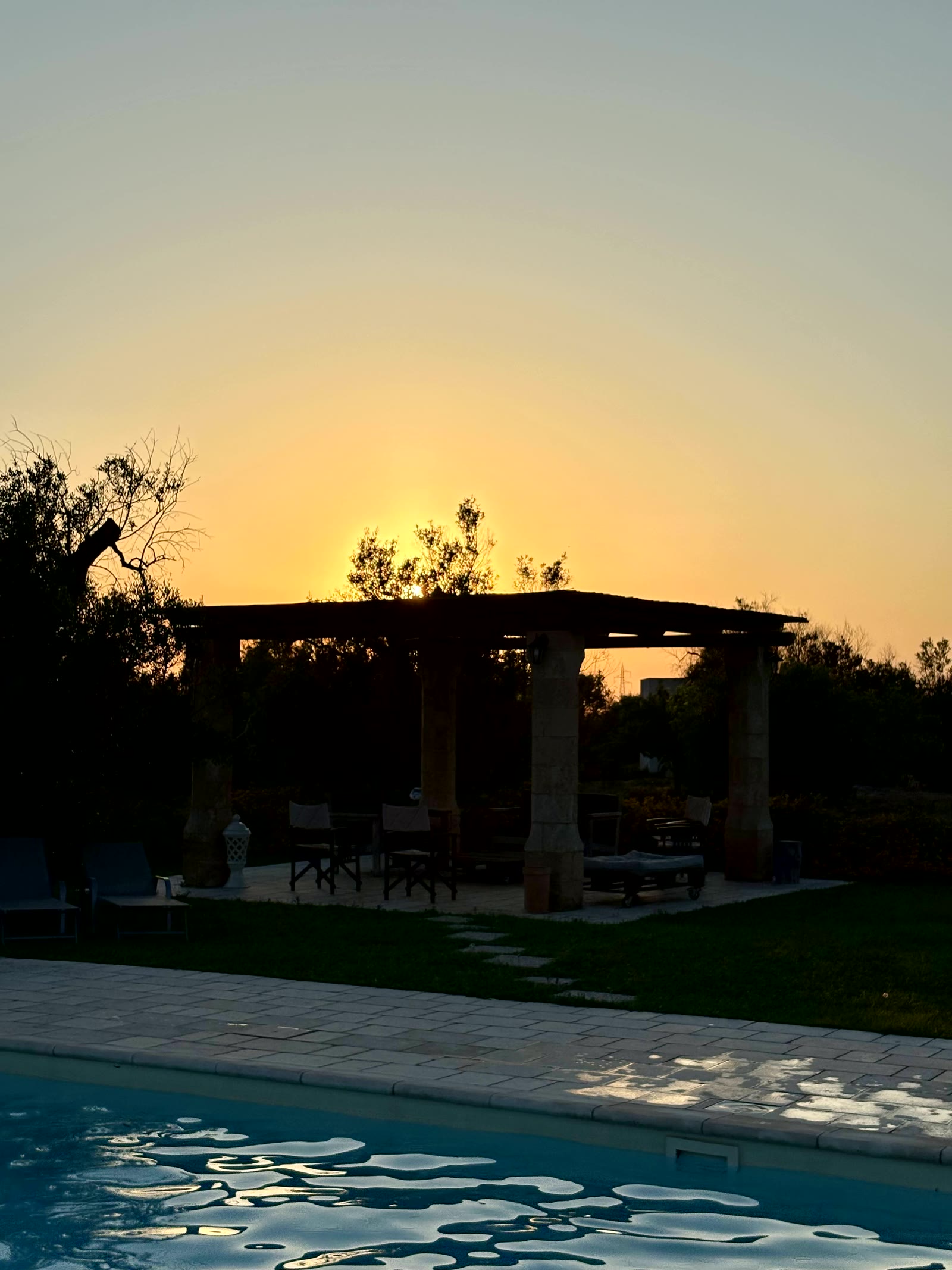
A stone pergola at sunset beyond the pool, the sky going gold behind the olives

The masseria at ease · afternoon into evening

Stayed
Borgo Egnazia, Savelletri di Fasano
Walked
The Castro cliffs, the rock pool at Marina Serra, the white lanes of Specchia at midday
Saw
The Tree of Life mosaic at Otranto, laid by the monk Pantaleone in the 1160s, and the chapel of the eight hundred skulls
Read
Veblen, The Theory of the Leisure Class, in the one landscape that refutes it
Best hour
Golden hour on the Adriatic side, when the limestone holds the last light over the water
Season
Deep July, the sea warm into the evening, the cicadas constant
The Field Study continues

Povera, and rich.

Return to the route