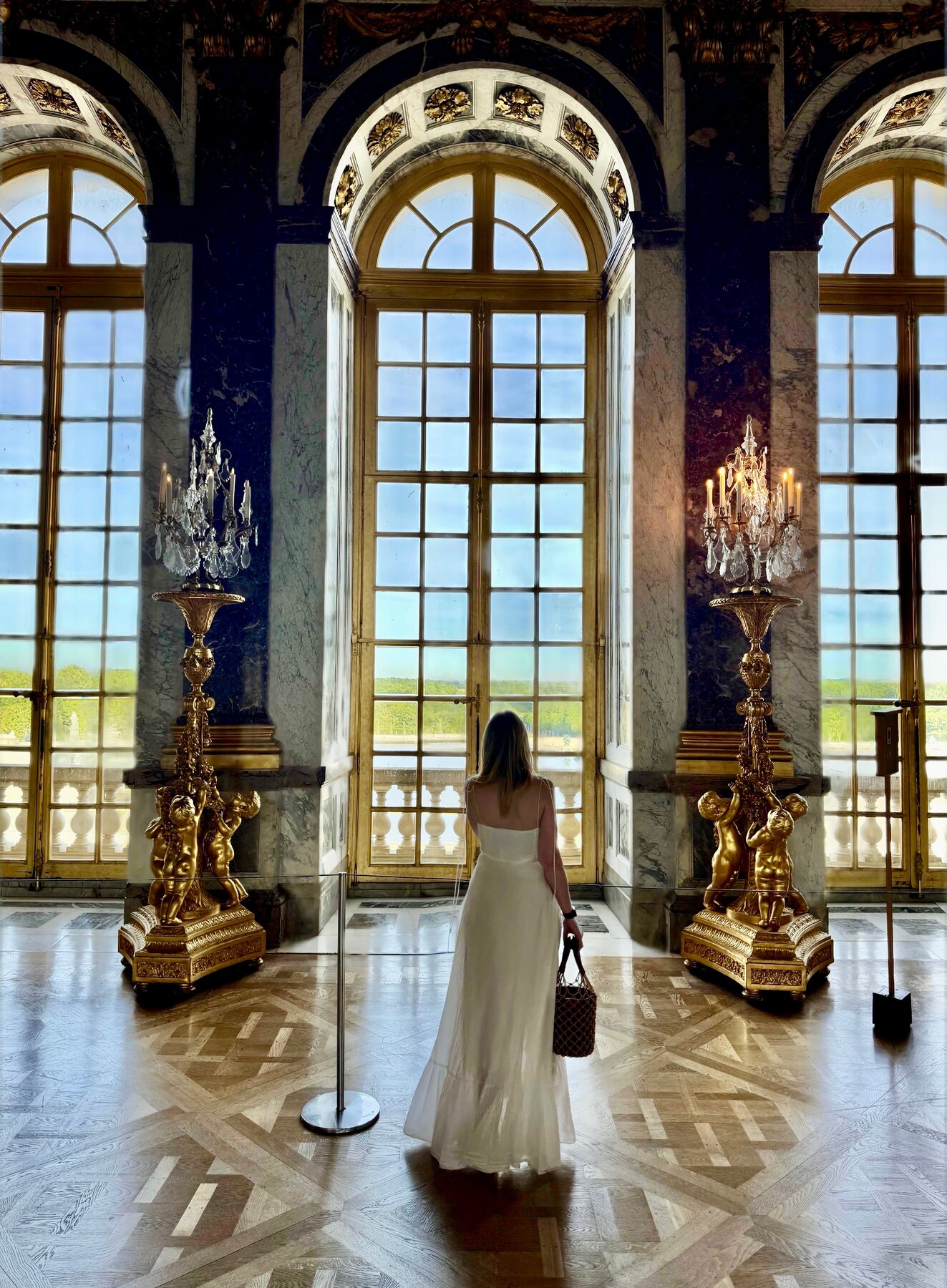
The hotel sits at the edge of the park, close enough that the palace is a fact of the morning rather than a destination. You do not drive to Versailles from here. You walk out of a side door and into it.
Versailles · Île-de-France
A night at the Waldorf Astoria Trianon Palace, and a walk through the queen's landscape at seven, before the tourists and before the heat. What the pastoral is, understood from inside it.
The hotel sits at the edge of the park, close enough that the palace is a fact of the morning rather than a destination. You do not drive to Versailles from here. You walk out of a side door and into it.

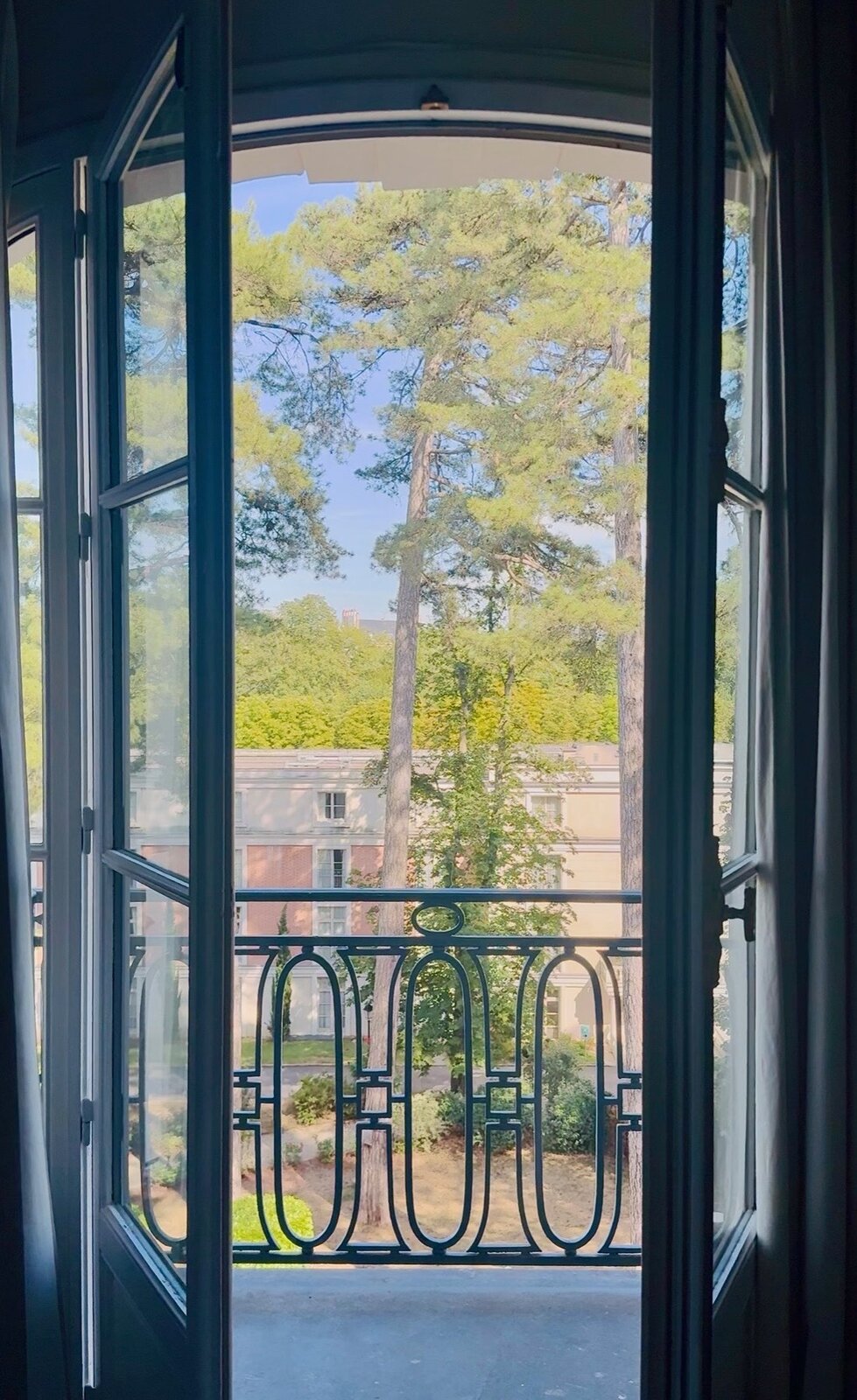
The window, at first light
A glass poured to the park

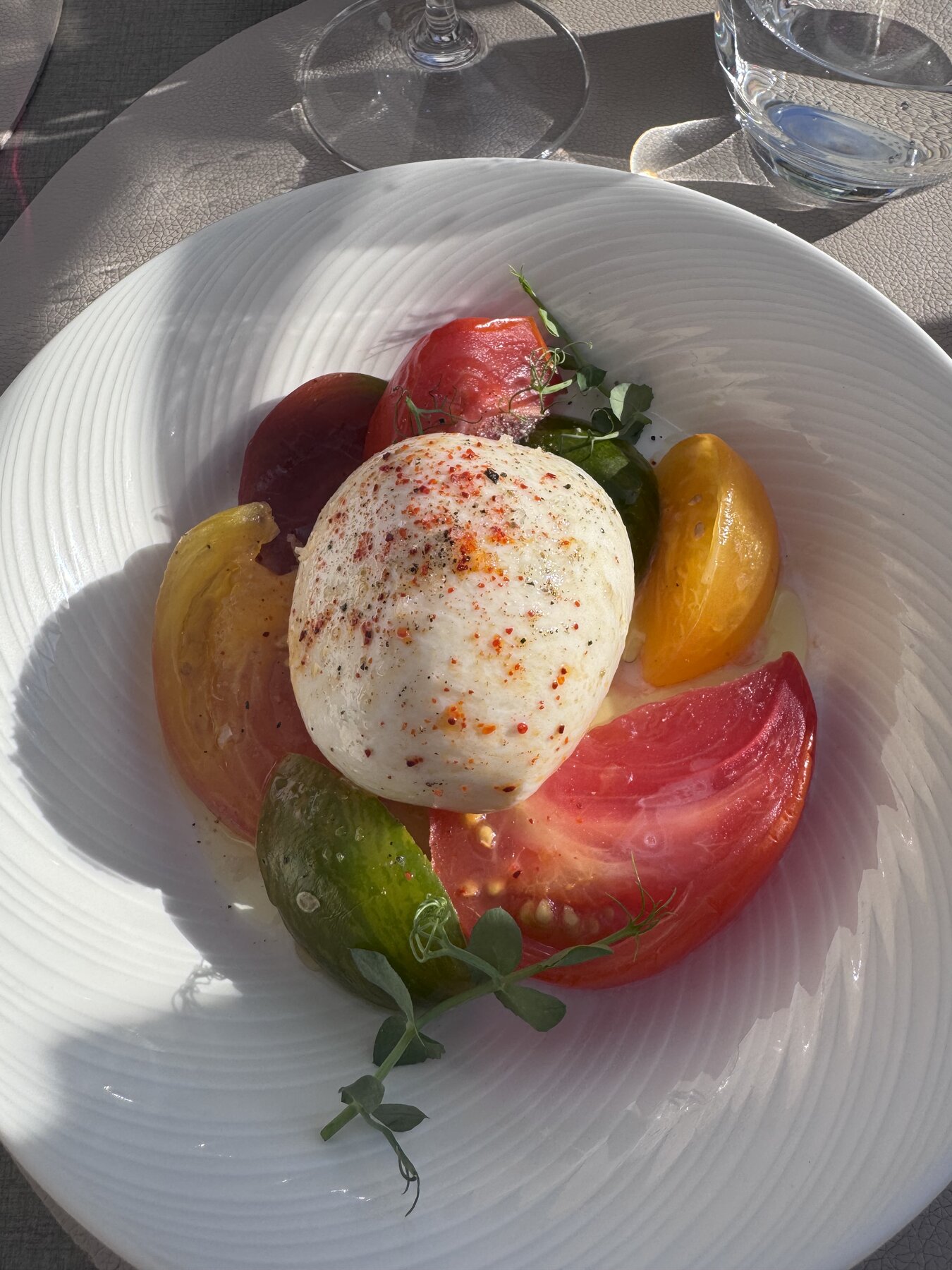
The table, in full sun
Waldorf Astoria · Trianon Palace
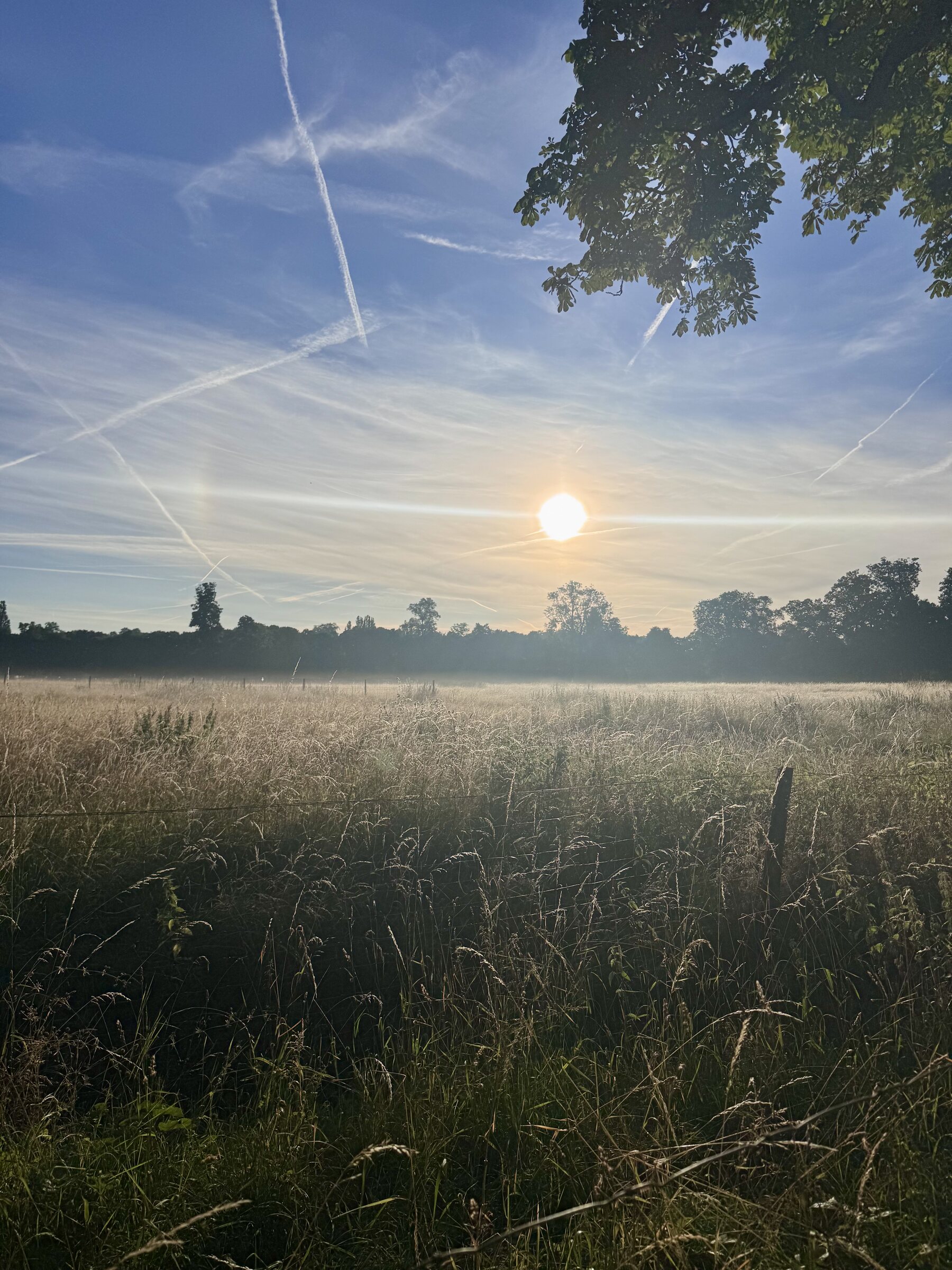
I woke early on purpose. The best hour at Versailles is the one nobody queues for, before the coaches, before the gift shops raise their shutters, before the gardens fill with the particular fatigue of a place seen through a phone. At seven the estate belongs to the birds and the gardeners and almost no one else.
The air was already sweet. Cut hay somewhere, and the green smell of grass that has held its dew. The meadows run long and loose here, nothing like the clipped geometry the postcards promise. Horses stood in the far grass, unbothered. You could smell them before you saw them, warm and animal on the cool air, and it was the least expected thing about the morning, that Versailles should smell of a farm.
Horses in the far grass, the west park at seven
The paths are dusty and uneven underfoot. Gravel gone to powder in the dry weeks, dips worn by three centuries of feet, the occasional root breaking through. Squirrels crossed ahead and stopped and went on. Birdsong carried without competition. There is a stillness in the estate at that hour that the palace itself never has, a quiet that belongs to the land and not the architecture.
I walked toward the hameau. The queen's hamlet, at the far edge of the park, past the Petit Trianon.
Versailles, filmed at seven · July 2026
In 1783 she had it built here. Thatched cottages around an artificial lake. A dairy beside a second dairy that existed only so she could sit and taste. A windmill whose wheel turned nothing. Plaster deliberately cracked and painted to look older than it was. Rustic outside, and inside, silk. The most expensive simplicity in Europe.
At seven in the morning, empty, it does not read as folly. It reads as longing. The cottages sit low and quiet by the water, the reeds move, a duck leaves a line across the lake and the line closes behind it. It is genuinely beautiful, and that is the thing the history books do not quite prepare you for. Standing in it before anyone else arrives, you feel the pull of it directly. The desire to leave the palace behind. The wish for the plain, the small, the natural. The dream of the pastoral, dreamed by the one person with the least reason to want it and the most means to build it.
That is when you understand the gesture. Not from reading about it. From standing in the cool grass at the water's edge with the palace at your back, feeling the exact thing she felt, which is that once you have everything, the last thing left to want is the appearance of having nothing. The performance of the natural. The staged field. The most sophisticated desire there is, dressed as the simplest.
The ultimate luxury was the same in the eighteenth century as it is now. It was never the gold. It was the meadow, built by people who had already bought the gold and found it wanting.
This week in Paris, thirty minutes up the road, the couture houses confirmed it without meaning to. Dior showed in the gardens of the Musée Rodin, the ceiling of the show tent garlanded with flowers. Chanel filled the Grand Palais with a garden, beanstalks to the roof, blooms overhead. Six-figure dresses sold to the smallest clientele in the world, staged inside constructed nature. The queen built a village. The houses build a garden. Same gesture, same reach, two hundred and forty years apart. The dream simply changes its guests.
The palace at her back
By the time I walked back the light had hardened and the first groups were coming through the gates. The hour was over. But I had already seen the thing I came without knowing I was looking for, which is that the most expensive taste in the world is the taste for the simple, and you can only really understand it standing in a false meadow at dawn, wanting it yourself.
Next · Provence
Return to the route