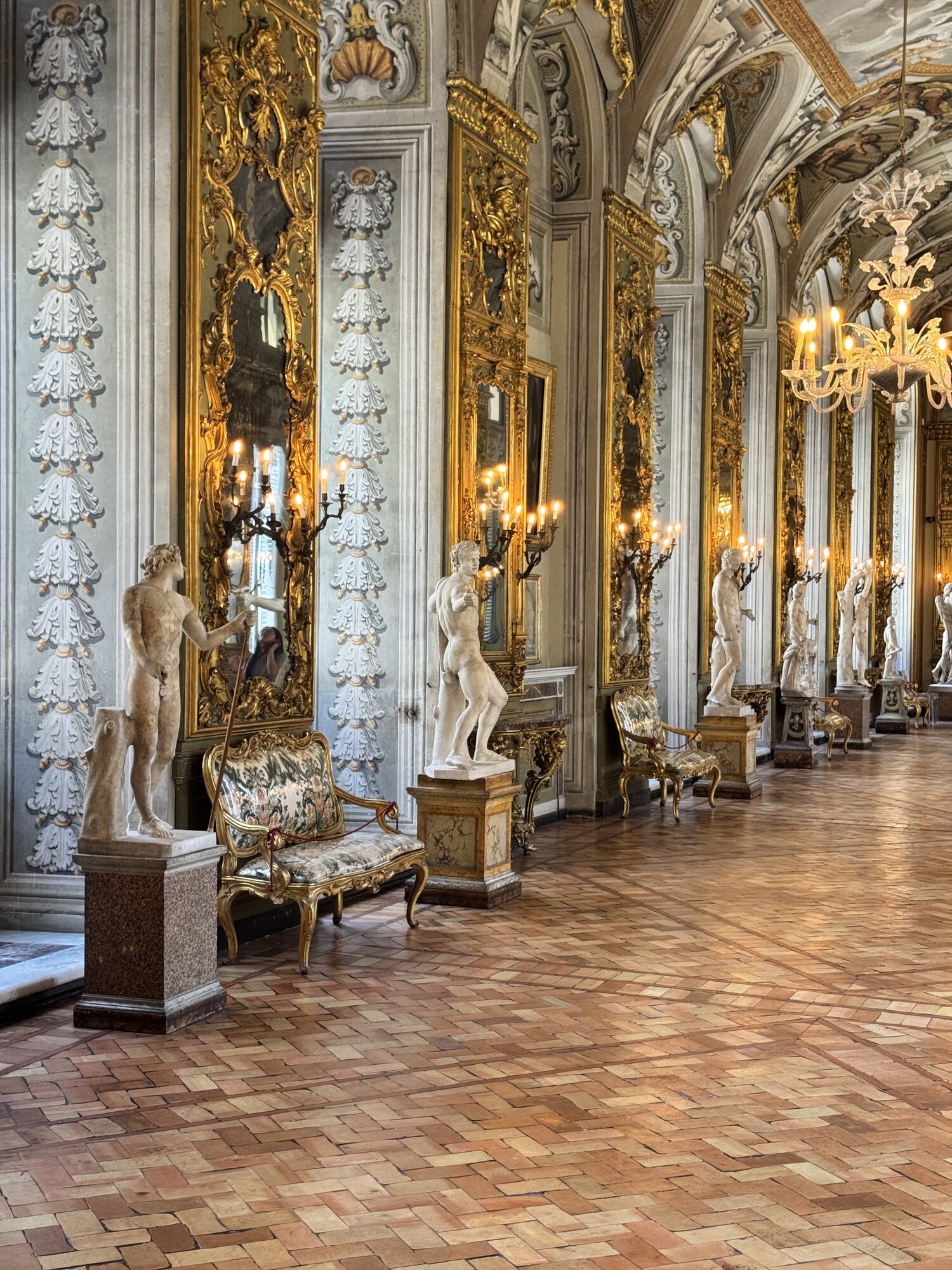
The gilded Gallery of Mirrors at the Galleria Doria Pamphilj, Rome, statues and mirrors along a parquet floor
Studio Cronborg · Field Notes · No. 06

The city that does not erase

Rome · July 2026

A high-summer week in Rome, based at Orient Express La Minerva behind the Pantheon. On the palimpsest, the art of the concealed layer, and two houses that carry a whole city on the hand. The reserved surface and the heat beneath, held on a single page.

Rome is the one city historians call a palimpsest and mean it exactly. A manuscript scraped and written over, every earlier layer still legible beneath the last. Medieval houses built into Roman theatres. Renaissance churches raised over pagan temples. An imperial street lying five metres below the one you're walking. Every other capital in Europe modernised itself smooth in the nineteenth century. Rome refused. It absorbed instead. Every sack and flood and renaissance became another layer rather than a replacement, and the city kept them all readable. That refusal is the whole character. Rome doesn't resolve its contradictions. It stacks them, and lets you read down.

The temperament works the same way. The heat is high and the surface is cool, both at once, and the instinct to call that moody or inconsistent misses what's happening. There's a Roman word for it. Sprezzatura, coined by Castiglione in 1528, the art of making the difficult look effortless and concealing all the labour beneath an appearance of ease. What matters is the layer underneath. The effortlessness is scraped over the top. The effort stays legible to anyone who looks. A Roman debates with total passion and total grace in the same breath, the gesture fluid and the control absolute.
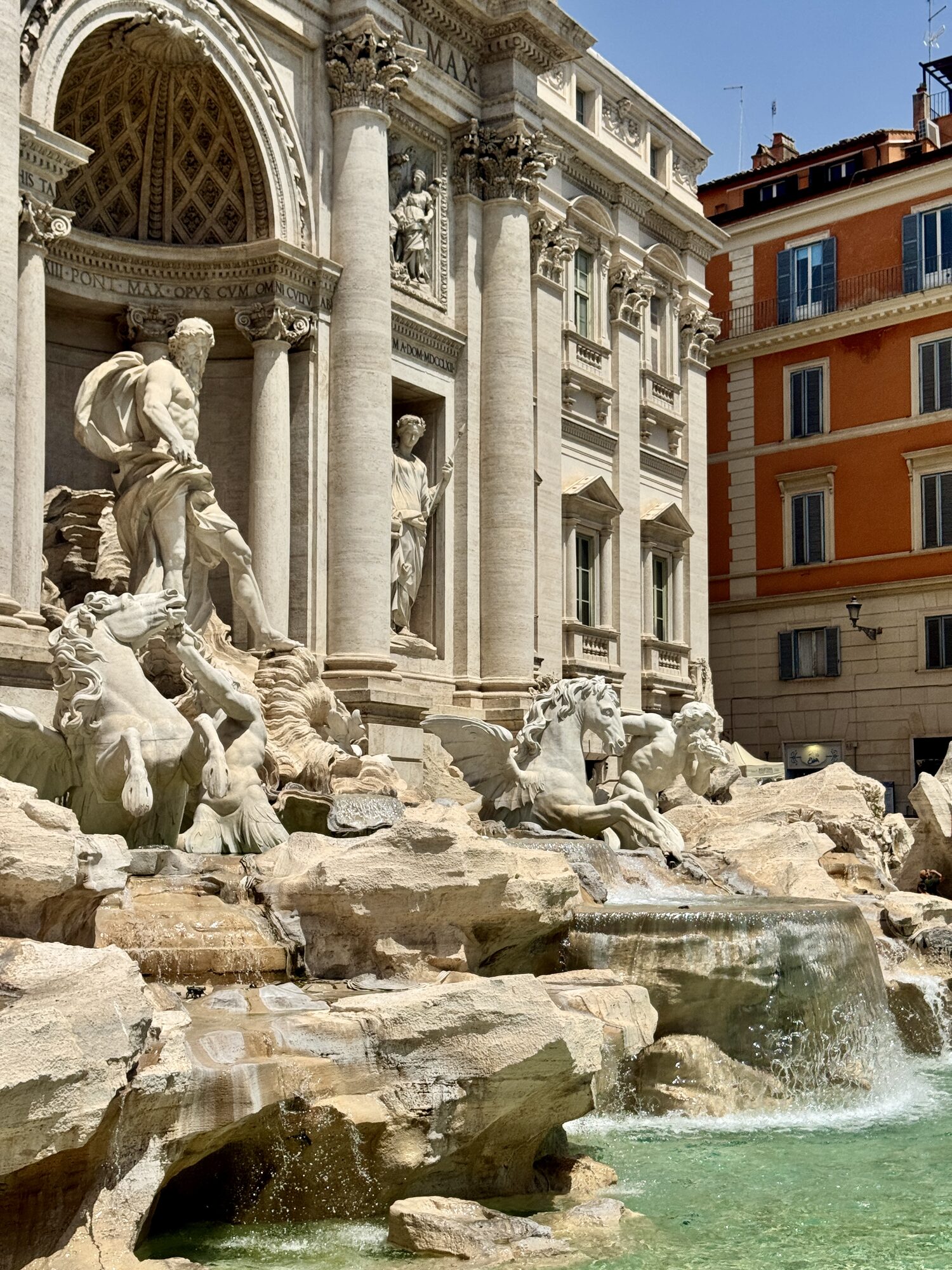
The Trevi Fountain, baroque figures in travertine above turquoise water
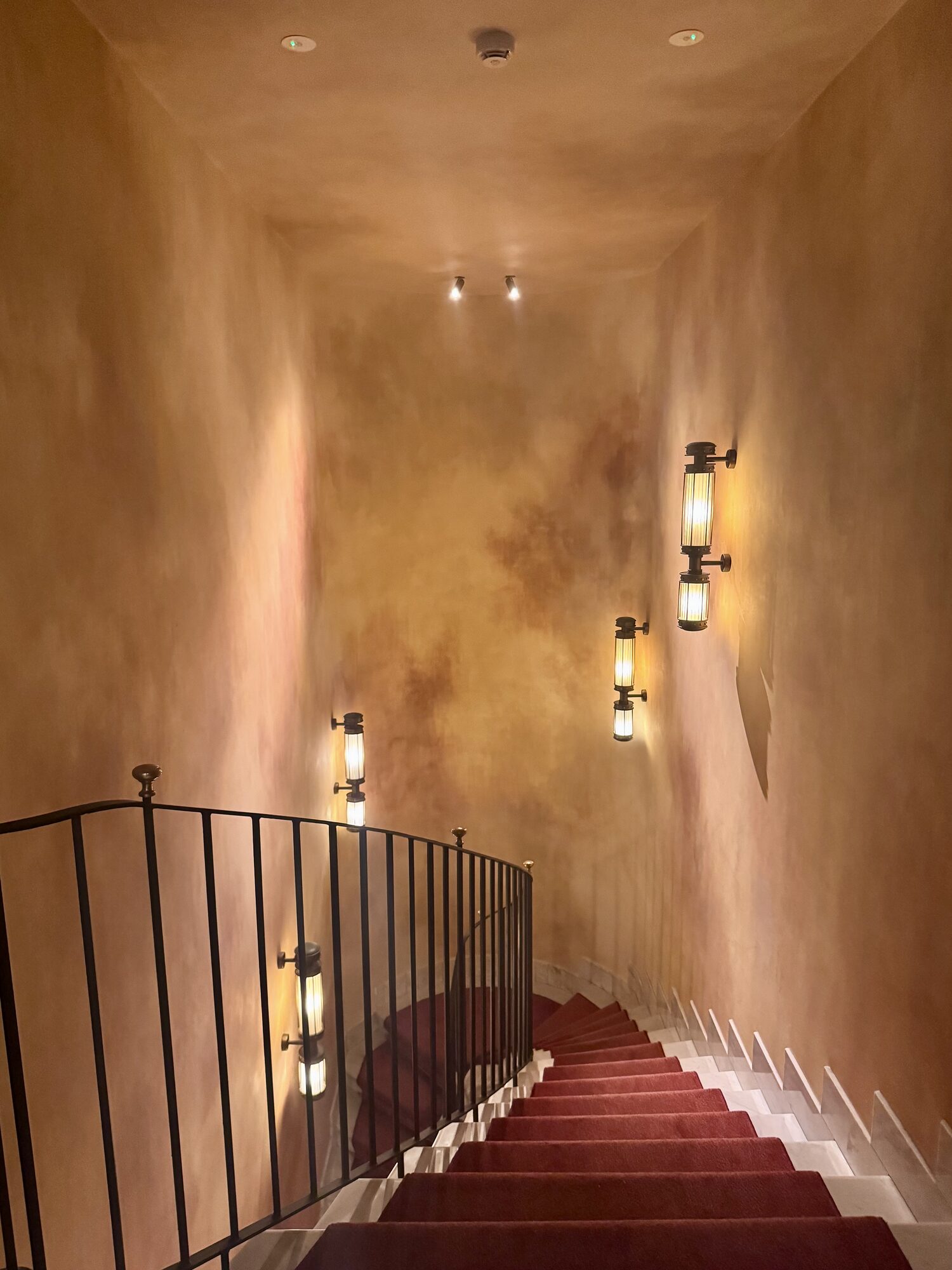
A warm-plaster staircase with iron rail and wall sconces descending over red carpet

The passionate exterior · the reserved interior

The hotel is the argument built. Orient Express La Minerva sits behind the Pantheon, a two-thousand-year-old temple fifty metres from the door. The building is a seventeenth-century noble residence, raised for the Fonseca family, turned hotel in the early nineteenth century for aristocrats and Grand Tour writers, and reopened in 2025 under LVMH as the first hotel the Orient Express brand has ever built, dressed by Hugo Toro in a warm Art Deco skin that quotes the polished train. Read it as a sequence and it's the palimpsest exactly. An imperial temple, a baroque palazzo, a Grand Tour hotel, an Orient Express interior. Four layers, each still legible.

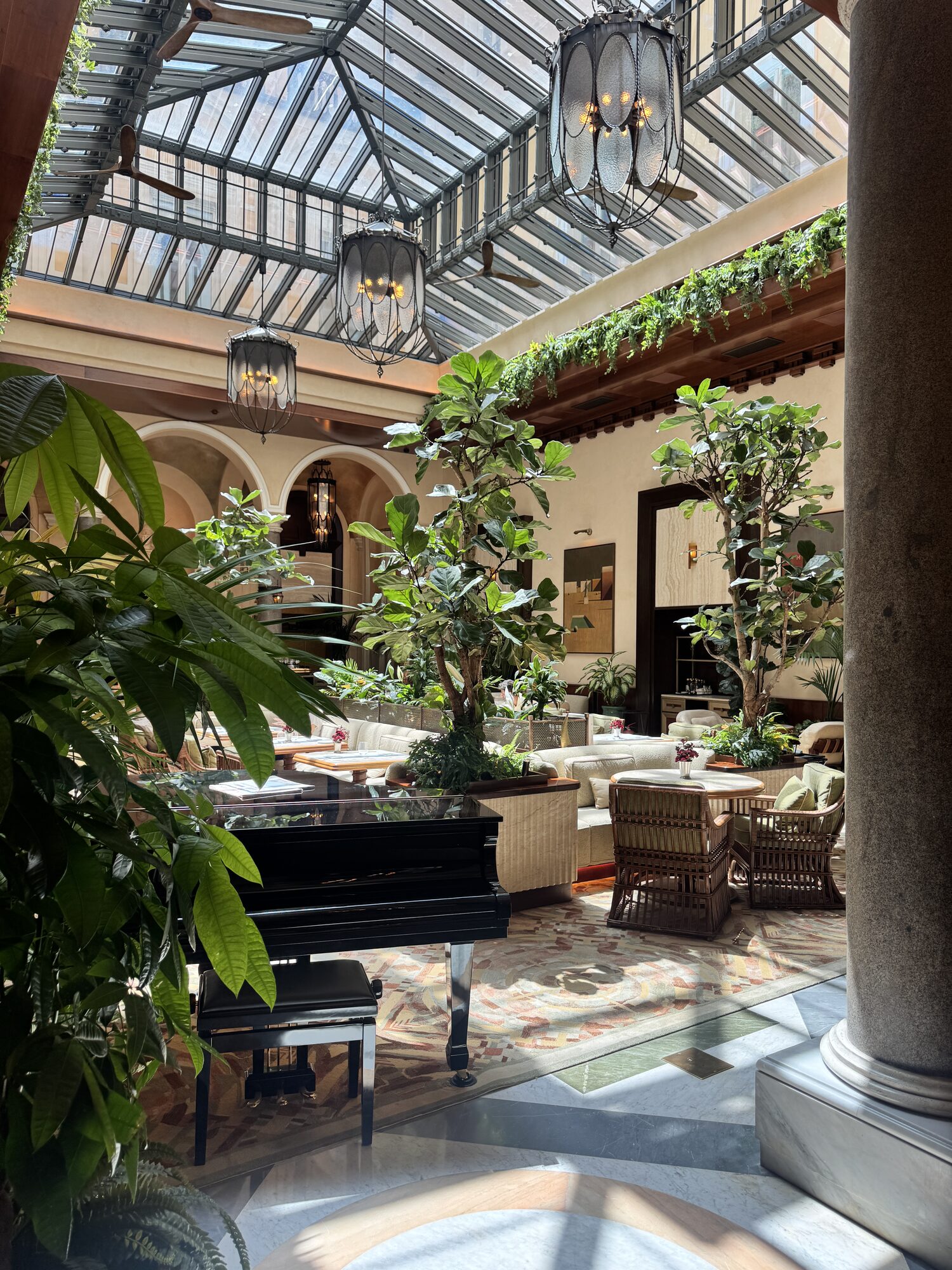
The glass-ceilinged winter garden at Orient Express La Minerva, greenery and a grand piano

The winter garden, the city gone quiet at the door. Evening on the roof, the eternal city going gold.

Step through the door and the city drops away. A glass-ceilinged winter garden, potted green, lacquered wood, rooms so still the Pantheon might be a coin's throw or a century off. Step back out and it's heat and crowd and noise. The hotel performs Rome rather than escaping it, the reserved interior laid over the passionate exterior, a threshold you cross rather than a contradiction to solve. The Minerva does at the scale of a doorway what the temperament does at the scale of a person and the city does across centuries. Same move, different material.

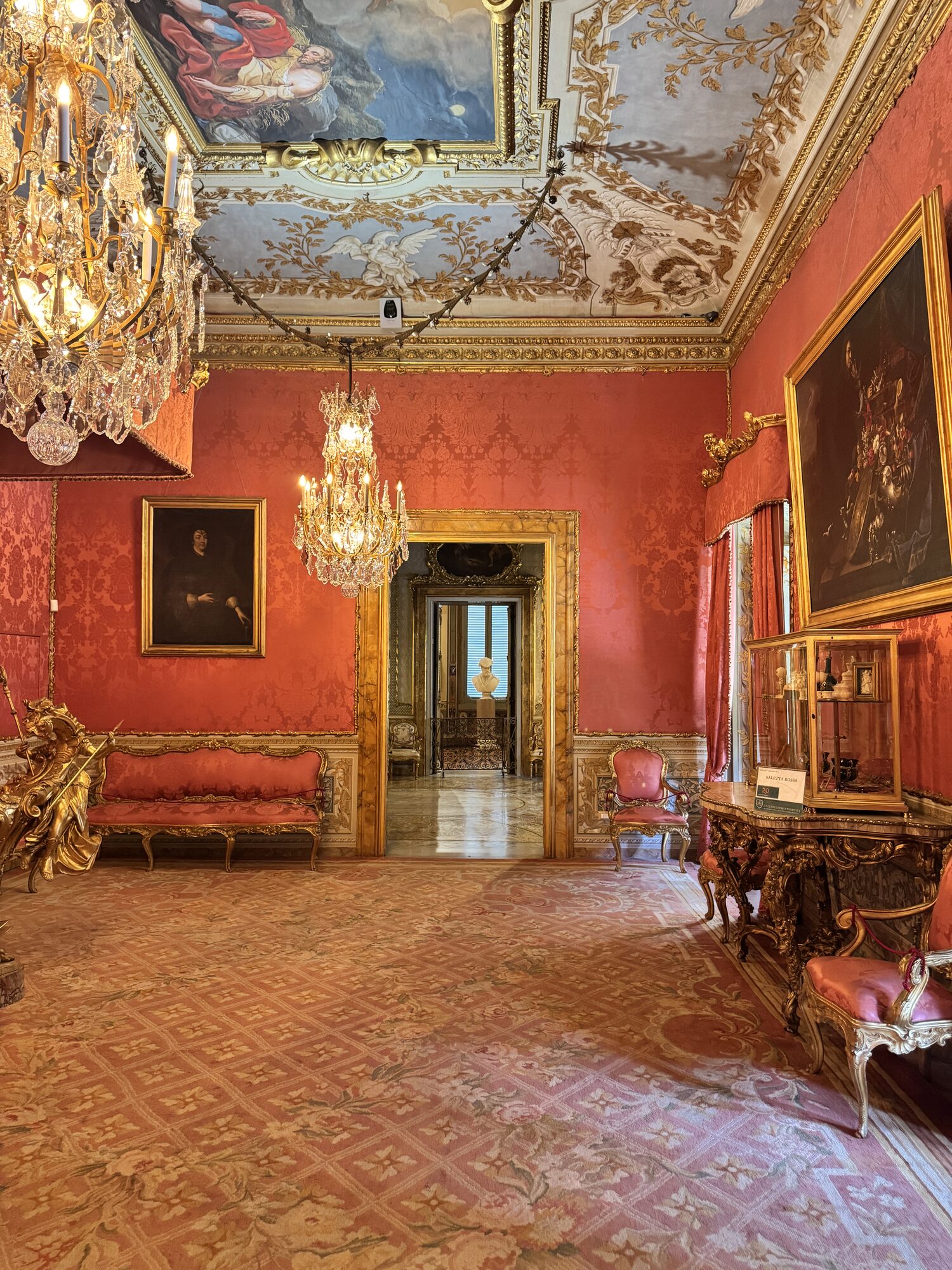
One room between the hotel and the shops explains them both. The Galleria Doria Pamphilj is no museum. It's a private palace, the largest still in private hands in Rome, lived in by the same family after five centuries, the collection hung floor to ceiling in the exact order set down in a 1767 manuscript that still governs every wall. No chronology, no labels, no curatorial hand smoothing it into a story. The prince narrates the audio guide himself. You walk through a bloodline that decided, five hundred years ago, that beauty was the highest grace a family could hold, and then held it, without a break, through every century since. The dignity in those rooms reads as persistence far more than grandeur.

A crimson damask room at the Galleria Doria Pamphilj, gilt frames and chandeliers
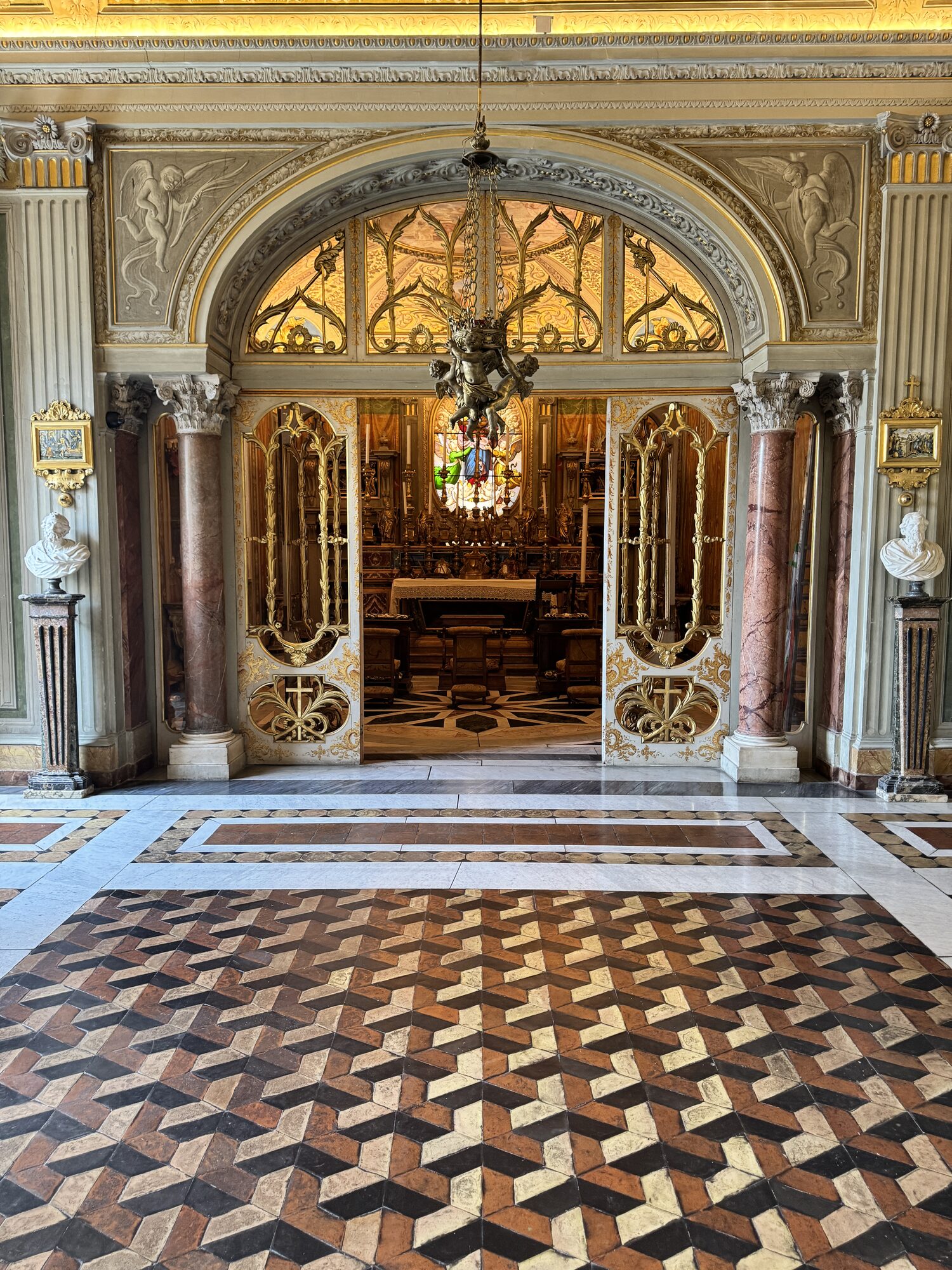
A cosmatesque marble floor and gilded doorway inside a Roman palazzo

Galleria Doria Pamphilj · hung to its 1767 order

And under the composure, the same heat. In one cabinet hangs Velázquez's Innocent X, the family's own ancestor, a pope famous for his ugliness and his temper, painted so unflinchingly he's said to have called it troppo vero, too true. The family never softened it. They hung their own ferocity behind a screen of gilded calm and kept it there four hundred years. Three centuries on, Bacon reopened that mouth into a scream, which tells you how much force the calm was holding. Dignity here is passion kept. Governed, inherited, refined, never once discarded.

There's a lesson about luxury buried in that gilded calm, and it runs against almost everything the industry now does. Most luxury sells the new. The drop, the launch, the reinvention, the season built to erase the one before it. Rome's whole worth is the opposite instinct. Nothing of value ever gets discarded here, so value accumulates instead of turning over. Pierre Bourdieu called the version of this that lives in people cultural capital, the taste and fluency a family builds across generations and hands down like an estate, the one kind of wealth money can't shortcut. The Doria Pamphilj is cultural capital you can walk through. Five centuries of a single bloodline deciding that beauty was worth keeping, and keeping it, until the keeping itself became the treasure. Refinement here was never bought. It was inherited, renewed, and never once allowed to lapse.

That reframes what place is worth in luxury. The easy version is an address, a flagship on the right street, a city named in a campaign and left there. The Roman version is deeper and much harder to fake. The city gets cut into the object itself, so the thing carries its origin wherever it travels, the way Bulgari carries the inscriptions and roads and arenas of Rome in a single ring. Jean-Noël Kapferer spent a career arguing that real luxury needs time incorporated, roots that resist the tyranny of the new, and Rome is time incorporated at civilisational scale. You can build a house tomorrow, hire the finest hands, spend without a ceiling, and still not buy the five hundred years the Doria Pamphilj simply had. That's the quiet Roman argument for anything worth making. Build it to be held, not sold. The one material that refuses to scale is time, and it's the material the deepest luxury is made of.

What the palace held, two houses made wearable. Most brands borrow a city for a backdrop. Valentino and Bulgari do the rarer thing. They perform the Roman operation itself. They layer. Valentino opened on Via Condotti in 1960 and has never left Piazza Mignanelli, and it holds the two layers in tension the way the city does. Valentino Red, the crimson Garavani owned outright, the passion brought fully to the surface. Against it the house built its no-colour whites, pure reserve laid over the heat. Red and ivory, two sides of one page. Bulgari performs the stone instead. The wordmark cut with the classical Latin V, the oldest layer of the city carried in the letters. Gems shaped like the cobblestones of a Roman road. The B.zero1 ring drawn from the tiers of the Colosseum. The Diva's Dream fan lifted from the Caracalla mosaics the house itself helped restore. Neither one quotes Rome by address. Both carry it by method.

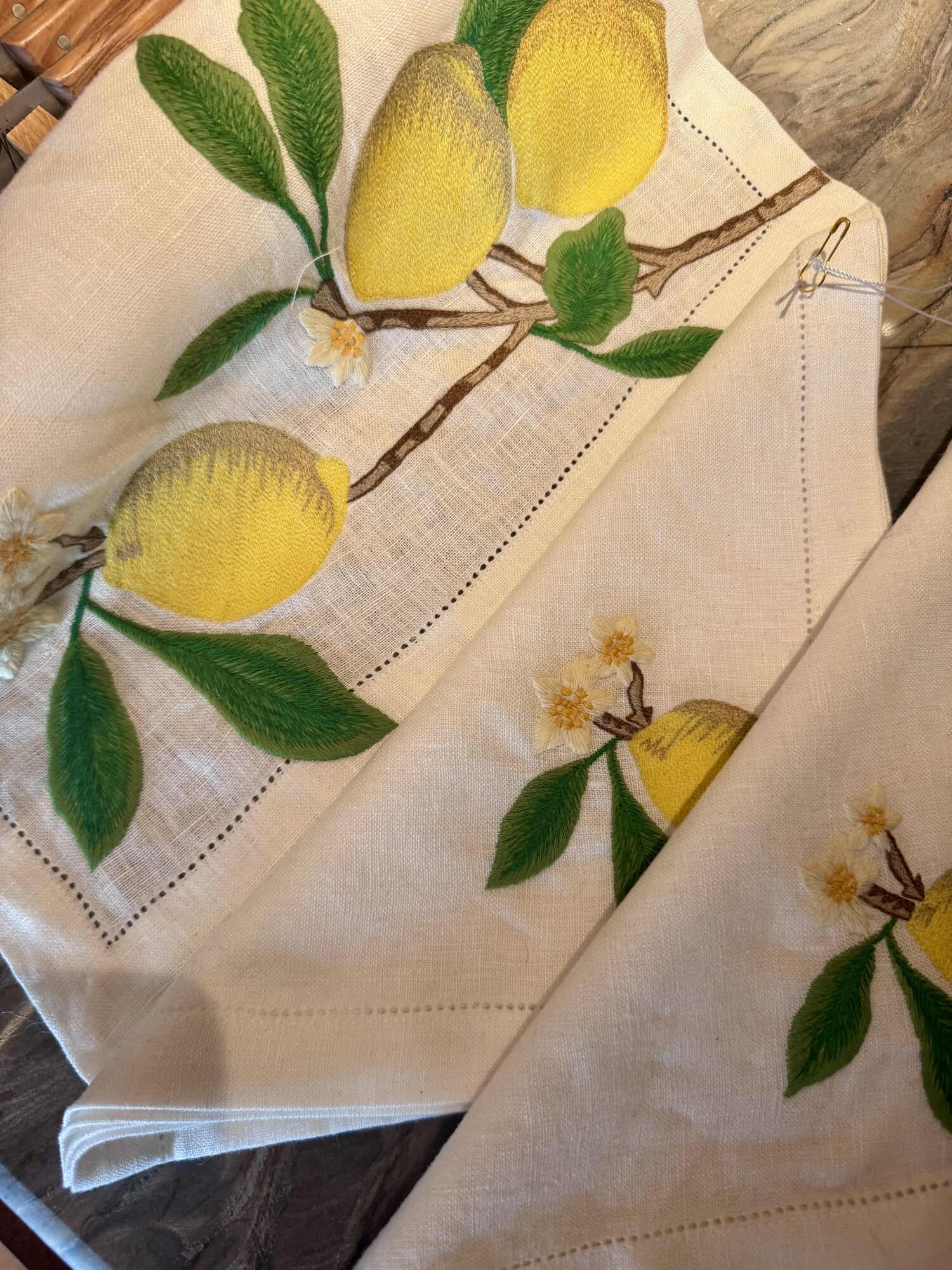
Lemon-embroidered linen napkins on a table in Rome
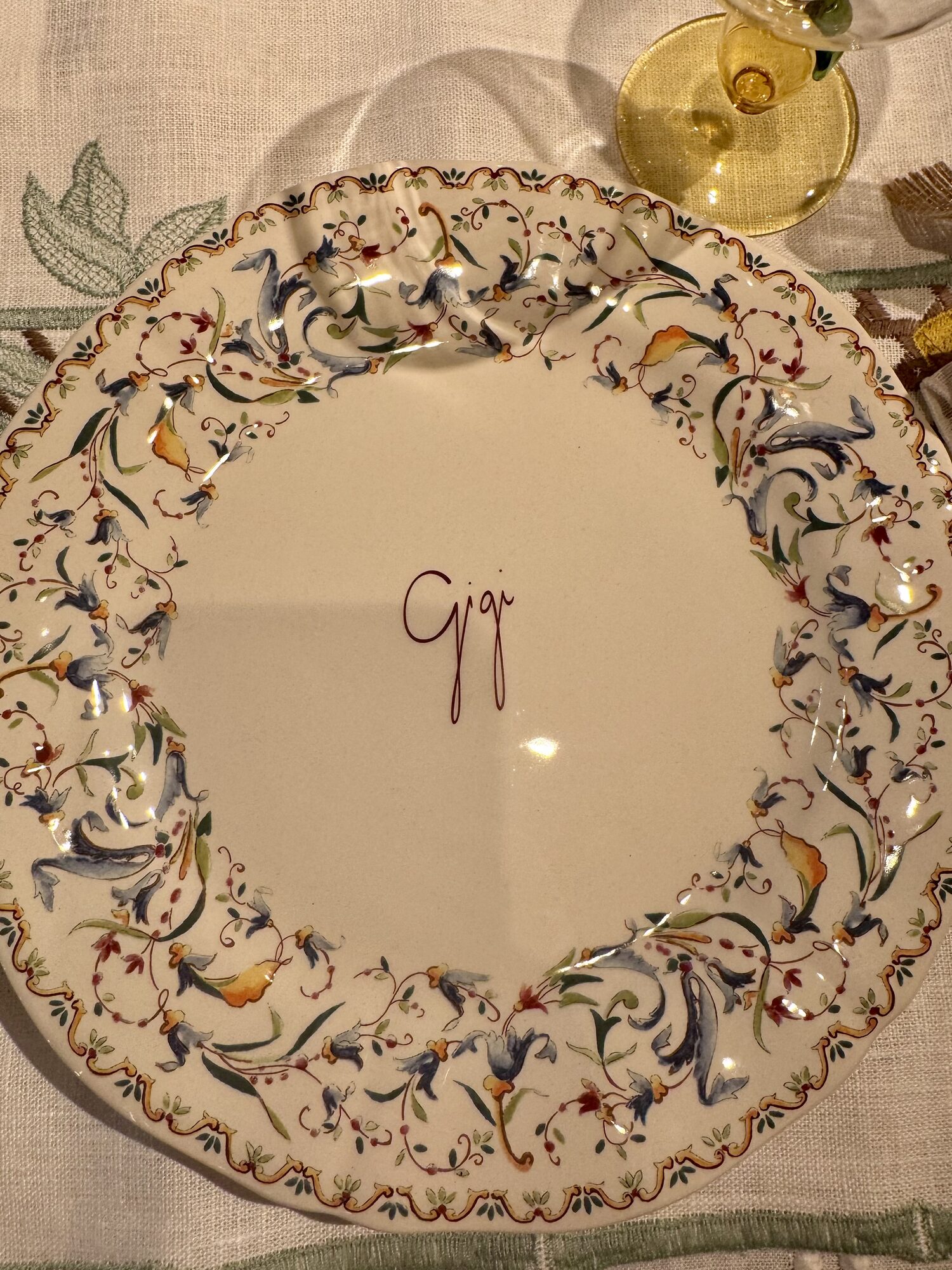
A hand-painted ceramic plate monogrammed Gigi, laid on lemon linen
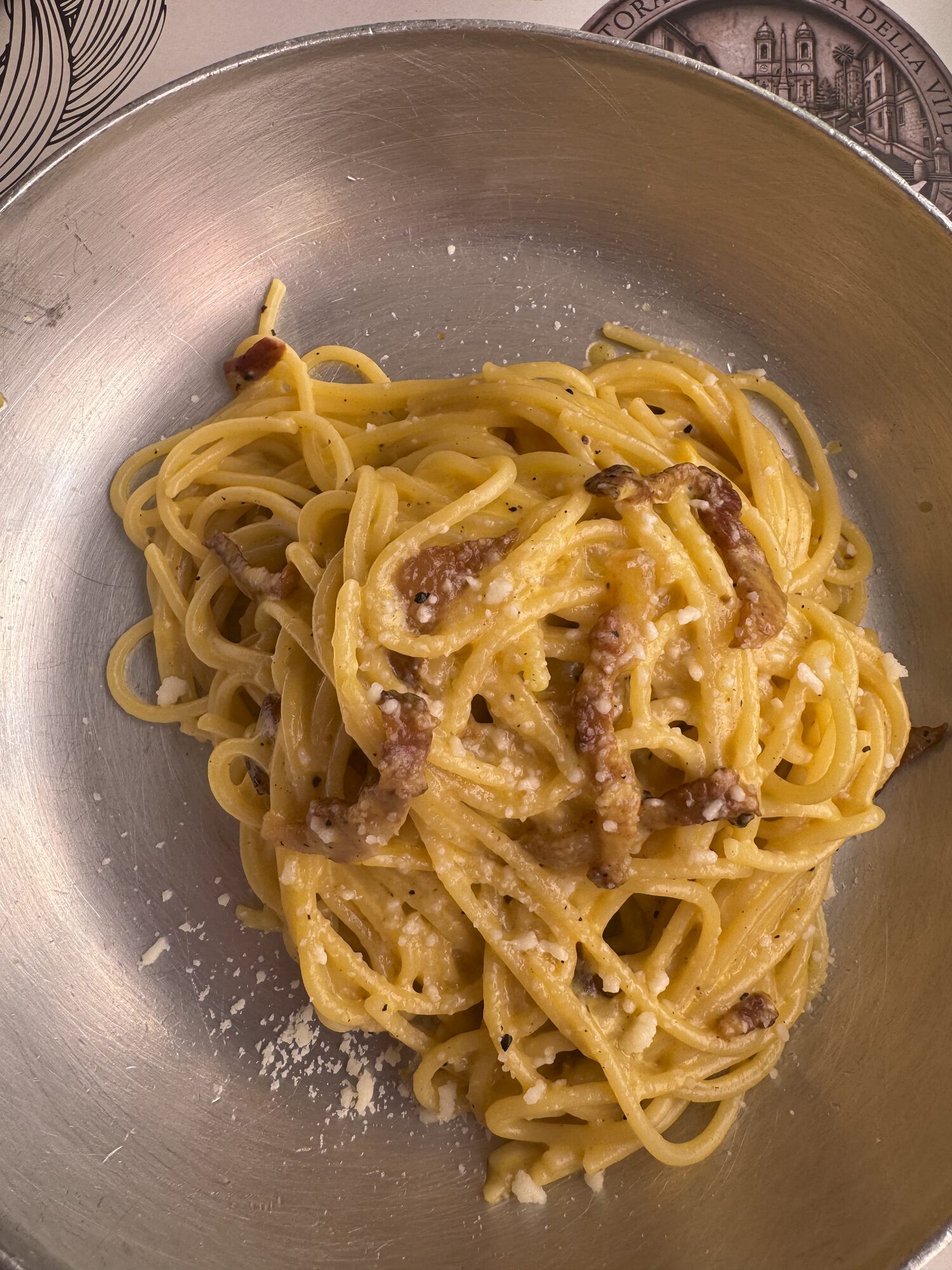
A bowl of carbonara resting on an engraved pewter plate

Rome · at the table

The ascent · a palazzo staircase, Rome, July 2026

That's the thing the week keeps teaching. Rome doesn't erase, it layers, and everything in it performs the same move at a different scale. The city over centuries. The temperament over a conversation. The hotel over a doorway. The family over five hundred years. The object on the hand. Reserve on the surface, heat underneath, both true, both readable at once.

I came to read one city and found it had already read me. Rome remembers you. It keeps every version, and hands them back.

Stayed
Orient Express La Minerva, behind the Pantheon
Walked
The Pantheon, Piazza della Minerva, Via dei Condotti, Piazza Mignanelli
Saw
Galleria Doria Pamphilj, hung to its 1767 order, and Velázquez's Innocent X
Read
Castiglione, The Book of the Courtier, on sprezzatura
Best hour
Early evening, when the travertine goes gold and the crowds thin
Season
High summer, the heat held late into the night
The Field Study continues

Rome remembers you.

Return to the route Next · The Salento