
Feature No. 04
The Tapestry and the Loom
Every house is selling craft this year. Florence is the one place where the claim can be checked. A tapestry that tells the story of making and a loom that makes are different objects.
Across the Arno in San Frediano, the Antico Setificio Fiorentino has been weaving since 1786, on looms built to Renaissance patterns, with a warper made from a drawing by Leonardo. The cloth comes in centimetres a day. The silk guild ran this city from the fourteenth century, and the workshops of the Oltrarno were not a quarter of the economy. They were the economy, and the banking fortunes that rose beside them understood the function, to convert money into permanence.
Then the Uffizi, and Bronzino’s portrait of Eleonora di Toledo. The reason to stand still is the dress. Bronzino paints the brocade with more devotion than the face, every gold pomegranate thread by thread, because the dress was the point. It was commissioned display for Cosimo I’s silk economy, the city’s most important industry worn on the body of the duchess. The first campaign image in the history of luxury. And its referent was real. The workshop in San Frediano has rewoven that same brocade. The dress in the painting can be made today, three streets from where it hangs, five hundred years later.
Up at Fiesole, on the hill the city is quarried out of, Belmond reopened Villa San Michele in April after eighteen months of restoration. A fifteenth-century Franciscan monastery with a façade attributed to Michelangelo, its terraced gardens replanted to the historic hillside pattern. The gesture is the old Florentine one. Capital converted into permanence, patronage as the durable form of wealth. The Medici invented that conversion and the city has been running on it ever since.
The Tapestry and the Loom
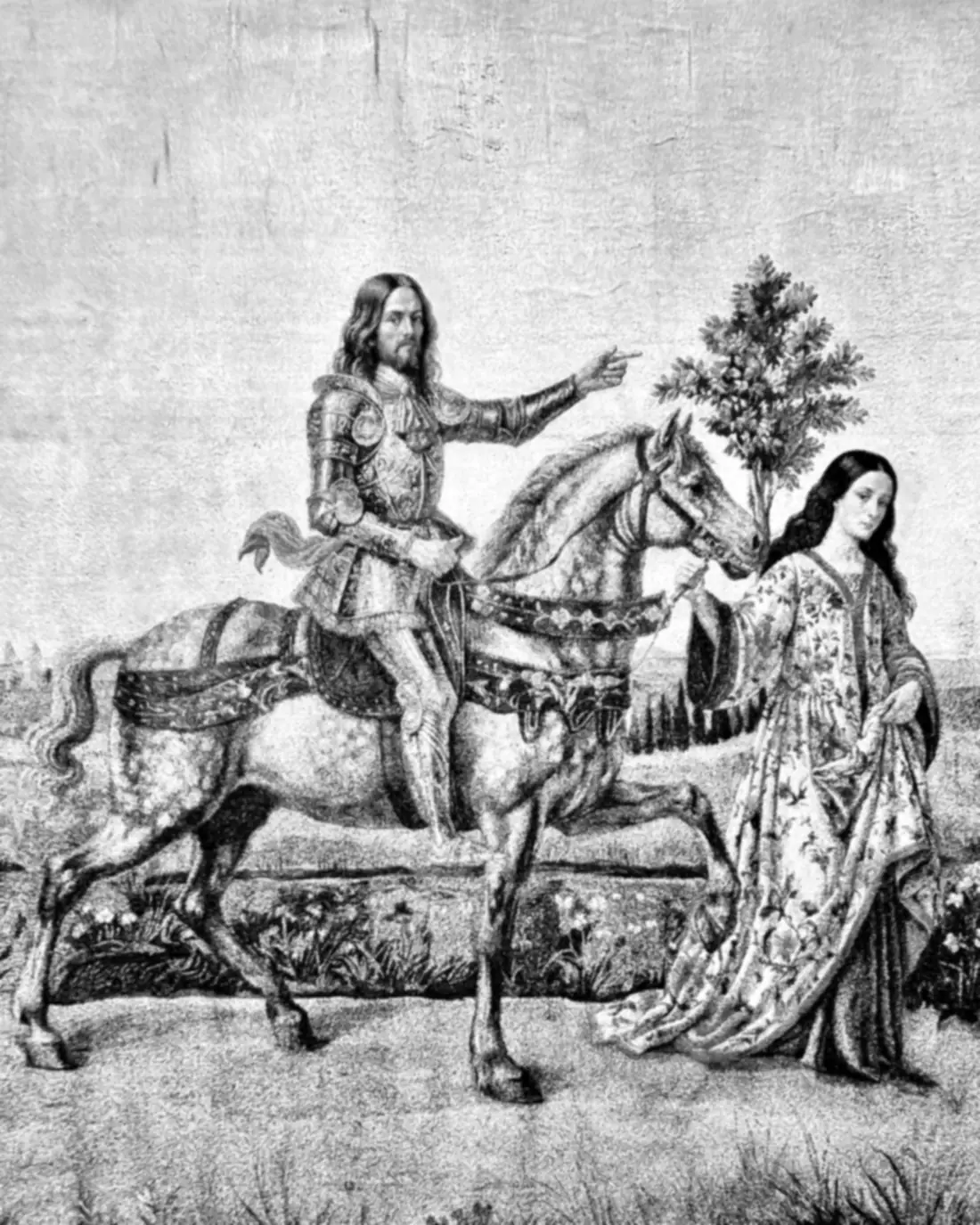
Then Palazzo Gucci on Piazza della Signoria, where Gucci Storia replaced Gucci Garden in April as the first curatorial statement of the Demna era. It opens with tapestries inspired by Renaissance art, narrating a hundred and five years of house history. A room called La Manifattura shows archival tools beside technology from the ArtLab. As theatre it is accomplished. The staging is confident, the narrative controlled.
Rebecca Arnold draws the line between glamour and spectacle. Glamour enchants and admits you. Spectacle performs and keeps you in your seat. Gucci Storia is spectacle, staged in the city that invented the other thing, at the exact moment the market is repricing luxury around the maker’s hand. The houses gaining ground now are the ones that can prove the hand.
A tapestry about craftsmanship, in Florence, reads as an admission.
A tapestry about craftsmanship, in Florence, reads as an admission.
The Tapestry and the Loom
Read it in the magazine →